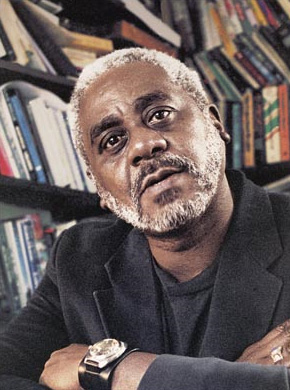
"Invisible Ink is a powerful tool for anyone who wants to become a better screenwriter. With elegance and precision, Brian McDonald uses his deep understanding of story and character to pass on essential truths about dramatic writing. Ignore him at your peril."
—Jim Taylor (Academy Award?- winning screenwriter of Sideways and Election)
Ever since Quentin Tarantino’s film Pulp Fiction was released, people have talked in awe about how
that film and others have played with traditional notions of story structure.
That film tells its story out of sequence and is therefore innovative, or so
the reasoning goes. This is a mistake. Telling stories out of sequence is
actually as traditional as it gets.
The idea that story structure is ruled by linear chronology
is a common error. As I have often written, and told students, one must look at
how stories are told in real life. One must study stories not in their written
form, or some other medium like TV or films, but in their natural habitat.
Real-life storytelling, person-to-person, is the parent form
of every other form of storytelling. In this ancient and most-used form of
storytelling is contained every structural element of story.
Since stories are all around us all the time, if you can
train yourself to pay attention to everyday speech, you will learn more than
I—or any book, blog, or teacher—could ever tell you about storytelling.
So, let’s look at stories in their natural habitat to see
how we are not married to linear chronology in stories and why.
Someone might tell you a story like this:
STORYTELLER:So, I go into work this morning –
traffic was crazy so I was about five or six minutes late. I grab some coffee
from the break-room. Someone had brought donuts so I grabbed one and everyone
in the office started talking about their long weekend and what they did. We
did that for about 10, 15 minutes until I noticed the time and mentioned that
we should get back to work. Someone was in the middle of a story, so they all
stayed in the break-room and I headed back to my office. On the way my supervisor
stops me and tells me that I’m fired for too much socializing.
That is one way someone might tell you a story, but it isn’t
very likely. Why?It’s a little
boring. Why? Because the listener has no idea why they are listening.Most of us are natural storytellers and
understand that power of structure and the manipulation of chronology.Most of us know to start with the most
interesting part of the story to cue people in to why they are listening.
TYPICAL STORYTELLER: I got fired
today! So, I go into work this morning –
traffic was crazy so I was about five or six minutes late. I grab some coffee
from the break-room. Someone had brought donuts so I grabbed one and everyone
in the office started talking about their long weekend and what they did. We
did that for about 10, 15 minutes then I noticed the time and mentioned that we
should get back to work. Someone was in the middle of a story, so they all
stayed in the break-room and I headed back to my office.On the way my supervisor stops me and
tells me that I’m fired for too much socializing.
See how this small change impacts the story? Putting the
point up front works to engage one’s audience; that sometimes means hopping to
the end of the timeline. “I got fired today” is the end of the story. It’s what
everything is leading to. But notice how your brain barely notices this time
shift. It’s because it is a natural way for us to tell stories and not anyone’s
invention or construct.
We all know people who tell stories the way I did in the
first example and those people make us very impatient because as listeners we
are straining to ascertain just which
details of their stories are germane.
The myth is that Hollywood invented story structure. They
did not—they capitalized on it. Structure is not about adhering to page counts
or putting the story events in a predetermined order, but rather understanding what
order of events ismost effective
for the story one happens to be telling.
My advice—listen to people talk. Listen to people tell
stories when they don’t even know that they are doing it. If the story is
engaging, chances are they are instinctively using sound structural principles.
You can learn all the “rules” of storytelling by listening to people. All you
have to do is take the time.
You can’t beat Billy Wilder—the guy was amazing, so good
that it’s almost scary. He was a screenwriter first, and if he had remained a
writer, he would still be a legend; he and his early writing partner CharlesBrackett wrote several hits for Paramount studios.Because of this success, he was able to convince the
studio to let him try his hand at directing. He went on to direct a string of
classics. Stalag 17 is one of those
classics.
Billy Wilder and early writing partner Charles Brackett
I should state that I don’t think that the film is
perfect—much of the comedy doesn’t age well. It’s much too broad for modern
sensibilities and often distracting. (I go into more detail about this in my
book Invisible Ink.) Still, in most
ways, it is a solid piece of work that entertains.
Stalag 17, made in
1953, takes place in a German POW camp during World War II. The prisoners are
all American airmen, who begin to suspect that one of their fellow prisoners is
working with the Germans and feeding them valuable information. Which of them
is the traitor?
The suspicion falls on a man named Sergeant J.J. Sefton,
played by one of my favorite actors of all time, William Holden (who won an
Academy Award for the role). Sefton seems to get favors from the Germans, and
he seems privy to information that must have come from them. He also has a
trunk full of supplies and goodies that the other prisoners do not have: Sefton
has soap to wash with while the others do not. Sefton eats eggs, while the
others must eat watery potato soup.
William Holden as Sefton
Not only is Sefton is permitted to visit the off-limits area
where the female prisoners are held, but he charges all the men in the camp to
have a look at the women through a telescope he has managed to acquire.
For all of these reasons, when the group suspects that there
is a spy amongst them, Sefton is the prime suspect. Sefton contends that it’s a
POW camp, after all, and that he has just learned to live by his wits. He has
learned how to trade well and that’s how he gets things, but that that doesn’t
make him a traitor.
At some point two new prisoners are introduced to the
barracks. One of them is a guy that Sefton knows—a rich guy named Lieutenant
Dunbar. Sefton doesn’t like Dunbar, believing that the rich guy has had life
easy because of his wealth.
Dunbar and Sefton
This is great story construction. The inclusion of
Lieutenant Dunbar is at the heart of what makes this story work: The group is
judging Sefton the same way Sefton is judging Dunbar.
Wilder shows Dunbar to be a team player, even though he
outranks everyone in the barracks and is worth 25 million bucks. Right away,
when he is introduced as a lieutenant, he waves it off as unimportant—he just
wants to be one of the guys.
What makes Billy Wilder better than most writers is that his
stories are not just a series of events strung together. His stories have a
point—a reason for being told. In this story we learn something about the
danger jumping to conclusions before we have all the facts, and just how wrong
we can be. In the end, the prisoners learn that they should have not been so
quick to judge while Sefton learns the same thing.
Billy Wilder with his six Oscars
Knowing how to make a fun, entertaining film that has a
meaningful theme at its core is what helped win Wilder six Academy Awards and a
place in film history as one of the giants. Believe me, if you learn how to
master this aspect of the craft of storytelling there may be a few awards in
your future, too.
“A wise man can learn more
from a foolish question than a fool can learn from a wise answer.” –
Bruce Lee
In English we use the word “why” to ask questions, but we also use “why,”
rhetorically, to mean that one shouldn’t, to criticize. When we are annoyed by
people we might say, “Why do people act like that?” But it is not meant as a
question as much as a condemnation.
When it comes to story structure, I often get questions from
students that are not questions. I remember once talking about the structure of
Finding Nemo and a woman asked me,
almost angrily, “Why do so many of the mothers die in these stories?” She meant,
“I hate when they do that.”
This is really common—we ask questions without wanting an
answer. Often we think we know the answer. We often don’t ask a real “why,” an
honest “why,” a “why” without judgment. A “why” without assuming the answer. A
pure “why.” Until we train ourselves to do, that we will never get to the true
answer.
We have to take the time to ponder. Pondering is an essential part of asking why. And it may take, days, weeks,
months or even years before you have come to a conclusion where all of the
puzzle pieces click together. Even then, your answer may change and evolve as
you learn more.
“Why?” and I are lifelong companions. I often ask “why”
because no one else will. There is a scene in the HBO biopic Temple Grandin where the autistic Grandin is at a slaughterhouse
and asks why the cows are mooing.
She is dismissed for asking such a question, but Grandin’s
reasoning was that cows are prey animals, and would not make sounds
unnecessarily to call attention to themselves.A moo alerts predators to their location, so they would not
do it without cause. She asked a real “why” and got a real answer. The cows
were stressed. They were alarmed. There were too many things around that
spooked them. It was through asking this question that Temple Grandin was able
to help design more humane slaughterhouses.
I, to the best of my knowledge, am not autistic, but I am
dyslexic and dyslexics are known to think this way, too. When Temple Grandin
asked that question, it reminded me so much of myself. It is exactly the kind
of question I would have to ask.
In my ongoing quest to understand my brain and why it works
the way it does, I just read a great book called The Dyslexic Advantage by Brock L. Eide, M.D., M.A., and Fernette F. Eide,M.D. One of the traits they mention is that dyslexics have a compulsion to know
why. I know this is true for me. It is difficult for me to grasp anything fully
until I understand why. So most of my “whys” are honest ones. I need to know.
So, why do so many
mothers die in fairytales and other stories? I could be wrong, but I have
pondered it, and had even before I was asked the question.
If stories are told and re-told because they contain
survival information, as I and others have argued, then why so many stories
with deceased moms?
Because, I think, for most of human history this was not an
uncommon occurrence. Mothers did die, often in childbirth. But children need to
know that life goes on and that they can survive even this ordeal. In BrunoBettelheim’s book on the subject of fairytales, The Uses of Enchantment, he points out that often there is fairy godmother
or some such figure that is a kind of ghost of the mother looking after her
child even after death.
Mothers want their children to survive even if, God forbid,
they are no longer there to take care of them.
Stories are dress rehearsals for life’s ordeals, so that
when we confront a problem we are better equipped to deal with them. And no
matter how our world advances technologically, we still face the same basic
problems that humanity has always faced.We need to eat, find love, protect and feed our children. We still fear
death and wonder what happens when we do die, just as did that famous Danish
prince:
HAMLET: Alas, poor Yorick! I knew
him, Horatio; a fellow of infinite jest, of most excellent fancy; he hath borne
me on his back a thousand times; and now, how abhorred in my imagination it is!
My gorge rises at it. Here hung those lips that I have kissed I know not how
oft. Where be your gibes now? Your gambols? Your songs? Your flashes of
merriment, that were wont to set the table on a roar?
Stories are rehearsals for life’s problems. Stories allow us
to face and survive many of life’s dilemmas in our imaginations, so that when
confronted with such problems they are not wholly new to us, and we can better
navigate them. And because we have the same basic problems as humans have
always had, with mainly superficial changes, stories will by necessity have
many repeating patterns.
Many storytellers today, upon noticing these patterns, ask,
“Why do they always do that?” But it’s not a real “why,” if they vow not to use
this pattern themselves. “I’m going to do something that no one has ever done,”
they proclaim. They change things without asking an honest “why.”
Sometimes the answer is that many storytellers have been
lazy and followed the story patterns without asking “why” themselves. This too
is a mistake. But often the pattern has stayed in place because it helps make
the story’s point clearly.
Many storytellers want to know what makes their story
unique, then, if they are going over such a well-worn path. The answer is you. You are the only one with your particular set of
experiences and if you filter what you write through those experiences and make
honest observations about what it means to be a human being trying to survive
in this world, even those old dusty story patterns will shine like new.
But that will only happens if you know why, or why not to,
use certain story devices.And the
only way to do that is to ask with humility and sincerity, “Why do they always
do that?”
This is not so much a blog post as
it is an announcement that my new book Ink Spots is now available at Amazon on
Kindle and paperback.Ink Spots is
a collection of my blog posts from over the years.Many of you may have read them, but I’m hoping that some of
you may want them conveniently on your Kindle or Nook.Or you might want an actual physical
book to pop on the shelf to refer to from time to time.Or you may want to give a book to
someone as a gift. ‘Tis the season.I’m just sayin’…
Last year I had the pleasure of
working with legendary animator, and very cool person, Glen Keane and he was
nice enough to provide a very nice foreword for the book.
Glen Keane and I at the pharmacy after he drove me to the dentist. Even while I was in pain the man was a joy to work with.
“Brian McDonald is an
exceedingly rare combination of talent and heart.
He not only is a remarkable
teacher he is also a gifted storyteller.
This makes what he has to share
that much more valuable. He speaks with passion and experience.”-- Glen
Keane excerpted from his foreword to Ink Spots
Other equally cool folks had nice
things to say about the book.Here
are just a few:
"Brian is that friend in
movie storytelling that everyone deserves. He writes in clear, readily usable
ways to improve your screenwriting. Like time-release story capsules they
ignite and helped me over many movies and countless story bends. Give him
a read, take a couple and repeat as needed." -- Ronnie del Carmen, story supervisor on UP and Finding
Nemo, director and writer at Pixar Animation Studios.
"Brian's book is filled
with insightful and useful gems for writers of any experience level. The
only reason you'll want to put it down is to go start writing yourself."-- J. Elvis Weinstein
writer/producer "Freak and Geeks", "Mystery Science Theater
3000", "Cinematic Titanic"
"Brian's
books and website are succinct, insightful resources for understanding not only
the mechanics, but the purpose, of storytelling. I've recommended them so many
times you'd think I was getting a piece of the action."— Chris Warner, Senior Editor Dark Horse Comics/Books
Others were nice enough to lend
their comments as well and they are in the book.I want to thank everyone for their support of the book.
I also want to thank those who have
been reading this blog over the years. You kept me going.When I started I didn’t know if anyone
would read it, or care.But it
turns out people did read it and got something useful from it.Thank you sincerely for your
readership. You guys have been great.
Soon I will post a real blog. I
promise. But, I did recently do a guest blog for Elise Stephens at http://www.elisestephens.com/
P.S. My apologies. In a mad dash to
get this book out before the holidays it looks like the wrong cover file was
sent to the printer – the word “forward” should be “foreword”. What this means
is that after the holidays the book will be unavailable while this correction
is made. Maybe this means the first version will be worth money one of these
days like an upside down stamp or buffalo nickel. Or not.
Charles Johnson National Book Award winner and author of Middle Passage
For the first time in the history of The Invisible Ink Blog I have asked someone to "guest post" -- if that's what it's called?My guest is friend and distinguished authorDr. Charles Johnson.He was awardedthe 1990 National Book Award for his novel Middle Passage, the American Academy of Arts and Letters Award for Literature and was a l998 MacArthur fellow.
------------------------------------------------
During the thirty-three years I was a college professor and taught the craft of
fiction to creative writing students, both undergraduates and those in one of
(at the time) ten best MFA programs in the country, the single greatest
stumbling block they faced was the challenge of plot. As aspiring “literary”
writers, they’d probably been taught in their literature classes that concern
with plot was beneath them or was strictly the province of commercial
fiction-writers. Whatever the case, in my workshops I discovered that many, if
not most, of my students between 1976 and 2009, were unable to distinguish
between “story” and “plot.” Put another way, they didn’t understand that there
is a significant difference between writers and storytellers (the late, great
Ray Bradbury identified with being the latter.) They were also unable to discern
different forms of storytelling such as the sketch, parable, fable, tale, yarn,
and the modern short story, which was literally invented, in both theory and
practice, by Edgar Allan Poe. Unable to see the rich possibilities in the
ancestral forms of storytelling that are our inheritance, unable to see how
those literary forms each have a plot structure with its own logic (and vision
of the world), and finally unable to see how one might be inventive and original
with form itself, my students inevitably settled into the easier narrative
strategies they felt most comfortable with: namely, plotless, unimaginative
stories in a naturalistic style. Sad to say, those students might receive a
passing grade in a writing workshop, some would even go on to publish, but they
would never become journeymen writers capable of executing well any storytelling assignment that came
their way during the course of their careers.
I remember one academic quarter when I incurred the wrath of most of my
17, supposedly “advanced” fiction-writing students. What I asked them to do was,
I thought, simple enough, something every professional writer or journeyman
could accomplish. I gave them what is considered to be one of the shortest
short-stories ever written, penned by Thomas Bailey Aldrich. I asked them to
complete that fictional narrative in a story of 1,000 words. To open up and
develop its terse, skeletal yet suggestive sentences.I could see how on that first day of class
they were afraid of this assignment. What I didn’t know was that they would seek
revenge for my giving it to them. Here’s the story: A woman is sitting in her old, shuttered
house. She knows that she is alone in the whole world; every other thing is
dead. The doorbell rings.” My writer friends (one a director of theater and
film, the other a screenwriter with 40 years experience in Hollywood) loved this
idea, and immediately sent me their versions of what they thought “happens
next.” And my students? Although they begrudgeningly turned in the assignment,
they hugely resisted entering into its spirit. About a third of them made the
old woman a murderer. At least one student had a character with my name killed
on the pages of his fiction. After a deep breath, I let them write whatever they
wanted for their next story, and with no word limit. Predictably, what was
turned in---what they were used to turning in when they were in beginning and
intermediate short story-writing classes---were thinly disguised, plotless,
autobiographical stories about their youthful unhappiness and/or sexual
misadventures. None of that work was publishable.
I concluded my academic career feeling that it’s tragic that creative
writing professors do not hold their students’ feet to the fire and make them
learn how to distinguish story from plot. In fact, I did try to do that by
requiring my students to write a 2-page plot outline for a new story every week
for ten weeks. (See my essay, “A Boot Camp for Creative Writing” in Writer’s Digest, March/April 2009.) And
on the first day of classes I gave them the judicious distinction made between
plot and story by E.M. Forster in his now classic series of lectures, Aspects of the Novel:
“Let us define plot. We have defined a story as a
narrative of events arranged in their time-sequence. A plot is also a narrative
of events, the emphasis falling on causality. ‘The king died, and then the queen
died’ is a story. ‘The king died, and then the queen died of grief’ is a plot.
The time-sequence is preserved, but the sense of causality overshadows it. Or
again: ‘The queen died, no one knew why, until it was discovered that it was
through grief at the death of the king.’ This is a plot with a mystery in it, a form
capable of high development. It suspends the time-sequence, it moves as far
away from the story as its limitations will allow. Consider the death of the
queen. If it is in a story we say ‘and then?’ If it is in a plot we ask ‘why?’
That is the fundamental difference between these two aspects of the novel.”
(Italics mine)
What Forster defines so clearly as plot is a fundamental aspect of all
good storytelling in the novel, short story, screen or teleplay. The question we
ask of plot---“why”---is what makes storytelling important as an interpretation
of events that have a causal basis. It’s the reason, as Brian McDonald has
pointed out often, why stories are tools for our survival. They clarify events for us. And it is for
this reason that my own mentor, novelist John Gardner, once said, “Plot is the
writer’s equivalent to the philosopher’s argument.” When we experience a good
story we replay in our minds all its parts and pieces, asking ourselves if they
seem logical, if they are consistent, coherent, and complete (which is the very
same criteria we bring to a philosophical
argument.)
Charles Johnson and Brian McDonald 2010
Furthermore, a story is not just any sequence of events. We choose a
particular sequence of events from a character’s life precisely because it is at
that moment that the character is
living for high stakes. In fiction, “flat” characters like the necessary sales
clerk who sells the protagonist his smartphone do not change. They are not
involved in a process of personal evolution. But a story’s protagonist is, and this is why we refer to him or
her as a “round” character. During the course of the story, during its process,
we watch the protagonist deal with his or her problem(s) through dramatic
scenes. They (and one hopes also the reader) will not come out of the story as
clean as when they went in. Psychologically, and possibly in terms of a change
in their fortunes, they will be at a different place by the story’s end than
where they were when they were introduced in Act One in terms of what writer
John Barth once called the “ground situation,” also known as the story’s
“conflict.”
The shape of a story is that of a funnel. The big end is at the start of
the story. There we are in the very open realm of possibility. When the story begins, we
can select any conflict or setting or physical details we want for our
protagonist. We can make that character male or female, black white or
otherwise, stout or thin, living in the country or the city. But as soon as we
make those decisions we despoil
possibilities, even in a story with fantastic characters. For example, if we say
a young dragon can only breathe fire when he has heartburn, then we cannot say
later in the story that he breathes fire in the absence of his having heartburn.
That despoiling of possibility takes us to the second part of the story, the
realm of probability (or, if you
like, Act Two). Here, as the character acts, it is probable that he or she will
perform in a certain way based on the decisions made about him or her earlier by
the writer. Finally, those actions take us to the end of the story, the narrow
end of the funnel, which is the region of necessity. There, all of its energy (energeia for Aristotle, the potential
inherent in a story) will be expended, and all questions raised by the story
will be answered. If a writer has done the work of plotting and storytelling
well in the first and second parts of the fiction, then the final part will have
as much “organic story flow” as the first two parts, moving to its conclusion
almost as if the story is writing itself, with inexorable necessity, and the
precision of an equation or a logical proof.
Some years ago, I outlined in more detail the plot structure I described
above in an essay titled, “Storytelling and the Alpha Narrative” (The Southern Review, Winter 2005, pages
151-159). But journeymen and master storytellers feel this structure from within when they are composing a
story. They learned it in their childhoods the way we learned how to ride a
bicycle, and they never forget it, for it guides them from one stage of the
story to the next. It goes without saying (but I’ll say it anyway) that a story
should generate suspense. It should make the audience care about “what happens
next?” It should be economical and efficient, with all its parts and pieces
reinforcing each other. And so, even though most of my creative writing students
disappointed me, as a teacher I had to be patient. Some, I knew, would before
the academic term ended have that “Aha!” moment when the structure of a story
became clear to them. When it becomes part of the DNA of their imaginations. For
others it might take months or years for structure to become second-nature or
instinct. Even for accomplished storytellers, the discovery of the possibilities
for plotting is new (and exciting) with each tale they tell. And isn’t that
really the reason why we keep returning to this activity all the days of our
lives?
P.S. Filmmaker
(WHITE FACE) and Author (INVISIBLE INK, THE GOLDEN THEME) Brian
McDonald joins us in a shootout to see whether or not Clint Eastwood's
1992 Oscar winning film UNFORGIVEN has stood the test of time.
I have met, in my travels, younger people who are interested
in film, but they have seen almost none of the classics. Sometimes they have
never heard of them. Not only is this sad, but it could stop them from becoming
the best filmmakers they could be.
A sadder thing is that it is not just students but working
professionals who know little of film’s past. I once spoke with a former film
executive who, in a meeting of fellow executives, discovered that he was the
only one in the room who had seen Casablanca.
I believe students of film should watch, and study, films
from every era of the medium—and it’s best if they watch these films
chronologically. That way they will be able to see when and how an innovation
has been made. They will know why the close-up was so powerful when D.W.Griffith learned how to use it.
If students watched these films in the order they were made
and released, no one would ever have to explain why it was cool that GreggToland showed a ceiling or used deep focus in Citizen Kane. They would get a sense of what it may have been
like to see these things for the first time.
Last summer I was a guest speaker at a summer camp for
teenage filmmakers where I showed a short film I made, in which I mentioned Star
Wars. After the film, a boy close to the
very age I was when Star Wars
came out asked, “Why did people like Star Wars so much?” Time stopped.
Here was this kid who looked so much like many of my friends
back in 1977 but saying something no kid would have ever said in 1977. It was a
surreal experience for me and I am sure I left my body.
Now, when I say Star Wars, I mean what younger people call A New Hope or Episode IV.I call it Star
Wars and it was Episode I. In its original release Star Wars had no Episode IV in the opening title crawl. Trust me, if it had, all
of us 12-year-old boys would have had a lot of questions. Many people remember
a later re-release of the film where the New Hope title was added to the crawl.
But I digress.Why was Star Wars so cool? It is
an interesting thing to be at the beginning of something that has that much
impact on the world. I wasn’t there for the first issue of Superman, or the Beatles on Ed Sullivan, but I was there for Star
Wars and it was one of the coolest things I
have experienced in my lifetime.
Many have commented of the Hero’s Journey aspects of the
film, based on what Joseph Campbell had observed was a recurring structure in
mythology, so I will not talk about that here—except to say that story pattern
has worked since the beginning of storytelling and that it certainly worked for
a vast audience in 1977.
But there are other things in addition to this ancient story
form that gave the film such power. First of all, things were dirty. This may
seem small, but it’s huge. If you look at the way high tech and sci-fi
realities were depicted pre-Star Wars,
you will see that things are immaculate. The future was always shown to be
clean. Pristine. Perfect.
But in Star Wars the
robots got dirty and had dents. The main character Luke Skywalker had a
hovercraft that had pieces missing. There was something beautiful about how
something so high tech, when it was beat-up and dirty, communicated so clearly
that it was still a teenager’s first car.
Today there is a cell phone called a Droid, but back in 1977
no one had a cell phone and droid was not a word. Android was a word. Robot was
the standard word for these automatons, but droid was brand new (as far as I
know). Not only was it a new word, but also it was a way cooler word than
robot.
These droids also had great personalities. They were more
like the comedy teams of Laurel & Hardy or Abbot & Costello (if you
don’t know those references, you should) than robots. Before this, most robots
had no real personality. They were machines, after all.
There were Huey, Dewey, and Louie from the film SilentRunning, and they were cute, but were light
on real personality. The Star Wars
droids were characters that happened to be robots. It was amazing to a
mid-seventies audience to see anything like this.
The design for one of the droids was inspired by the design
of a robot from the classic silent film Metropolis. Good thing Lucas knew his film history.
There were also the amazing effects. I once called Star
Wars a special effects film to a kid I was
tutoring, and he replied, “Star Wars
isn’t a special effects film!”.
He’s right. Star Wars
was THE special effects film. No one had ever seen anything like this. It was
the first use of the computerized motion control system, which ushered in a new
era. Even something simple like a lightsaber was amazing. There was no such
thing as a lightsaber before Star Wars. I’m sure you know that, but imagine being a kid seeing this crazy
light-up sword for the first time.
And don’t get me started on the great Ben Burtt and his
sound design. His sounds seem so natural that you can’t even imagine a blaster
sounding any other way. Before Ben Burtt all sci-fi sounds were electronic
bleeps and bloops with no warmth.
So many of these creative choices influenced special effects
and sci-fi from that day to this.
If there had been no Star Wars, the special effects films so popular today would be vastly different
in design, tone, and pace. Many of the movies, TV shows, and video games of
today are still ripples from the splash that Star Wars made.
If you have grown up in a world that has always contained
droids, lightsabers, and Wookies, then you can never know what is was like to
be among the first people to see them. But what you can do is watch what came
before and then see Star Wars; see if it
doesn’t look better to you. This is true for any film. If you want to know why The
Godfather was so groundbreaking, look at
what came before.
Have you ever heard Martin Scorsese talk about film? It’s
like he’s seen every film there is, and has committed each shot to memory.
Steven Spielberg is the same way. These filmmakers have been able to make films
that transform film because they know their history.
Film history is full of lessons. All you have to do to learn
them is watch.
When modern engineers see the pyramids of Egypt, they
marvel: How could people so long ago, without heavy machines or modern
building materials, build such impressive and enduring structures? Not for one second do they think that these pyramid
builders were inferior because they did not have our modern technology.
This is true too of ancient Roman structures, bridges and
aqueducts that still stand. Engineers do not shake their heads in pity at the
achievements of these primitives.
No architect or builder enters Notre Dame cathedral and
thinks that it’s such a shame that those poor fools in the past did such a poor
job of it without the use of computer models.
No, when modern-day builders, engineers, and architects see
these wonders, they are amazed that these geniuses of the past could do so much
with so little.
So why do today’s students of film dismiss the past so
quickly?
The fact that early filmmakers did not have such things as
sound, color, wide-screen, steady-cams, non-linear editing systems, surround
sound, small digital cameras with ultra-high resolution, or CGI, or whatever,
is seen only as a limitation by many of the students I talk to.
They do not marvel at what the pioneers were able to do
without our modern advantages; the early work is somehow inferior because
technology has improved. But those early filmmakers, with so much less, were
still able to produce classics.
Several years ago, I was giving a lecture at a university
where most of the attendees were interested in animation and computer-generated
effects. At one point I mentioned that they should watch the original 1933
version of King Kong and before I could
get out another word they all laughed. It was, they thought, a ridiculous piece
of advice.
All these years later their laughter reverberates in my
memory. How could they laugh at King Kong?
I was stunned.
Sometimes I feel very lucky to have been born when I was
because I got to live in an analog world. Stop-motion animation was still very
much in use in the world of special effects and had changed very little since
the very beginning of film. So what looks crude to younger eyes, because they
have been weaned on computer-generated effects, does not look quite so crude to
me.
I saw King Kong on
television when I was five or so and it was magic. It was one of the things
that got me interested in film. At that time, the film was nearly 40 years old
and the effects worked as well on me as I’m sure they did on the 1933
audiences.
In fact, the King Kong
animation of Willis O’Brien inspired a couple of generations of children to
grow up and become filmmakers. One of those kids was Ray Harryhausen, who
became a special effects icon. He was so popular that when people refer to his
films they are “Ray Harryhausen films”: not the actor’s film, or director, or
screenwriter, but the effects guy. No other effects artist can make that claim.
Peter Jackson says that King Kong is the film that made him want to make films. This
is by no measure a rare claim for filmmakers, artists, animators, and effects
people.
It is no coincidence that when comic book artist Art Adams created his series, starring an intelligent gorilla and his beautiful partner,
that he called it Monkey Man and O’Brien
after King Kong animator Willis
O’Brien.
For me, and for the others who were inspired by Kong, he was
a living, breathing creature. If stop-motion animation was “done,” just how
Kong could seem so alive?
When I was a teenager and the technology would allow, I
began to watch the animation one frame at a time to study just what O’Brien was
doing. I learned a few things by doing that. When you watch Kong move, his fur
seems to dance around and change erratically. Seen a frame at a time it is clear to see that the hair
changes from frame to frame because this is where O’Brien put his fingers to
manipulate the model.
In fact, my friend Todd Masters and I spotted one or two
surface gauges left in shots. Surface gauges are devices (a kind of pointer)
used to keep track of a model’s position but are meant to removed before each
frame is snapped. Even so, these “mistakes” did not take anything away from the
illusion of life that O’Brien was able to imbue Kong with.
One day, I was watching the fight scene between Kong and a
Tyrannosaurus Rex – at the end of the fight Kong breaks the jaw of the
dinosaur. What I noticed after studying the fight was that Kong gets the idea
to snap the jaw early in the fight – in fact he tries more than once to get a
hold of his opponent’s jaw before he succeeds in his plan.
What O’Brien did was give Kong a plan – Kong was thinking.
Even though on the surface the animation may seem crude by today’s standards,
what worked about the animation is timeless. I have seen more than a few modern
computer-generated creatures that have less going on internally. These
creatures are slick and polished on the outside, but vacant on the inside. They
do not think. They do not feel. But King Kong did.
To be fair to animators, many of them, more than most young
filmmakers I have met, tend to know and respect the history of their craft. For
them innovation and history walk hand in hand. (That said, I have met students
who say they want to be character animators and have never heard of the legends
in their field.)
It baffles me that in this, the Information Age, so many
people don’t bother to take advantage of the vast knowledge at their
fingertips. YouTube and Netflix are just sitting there, with all the treasures
of the films of the past – and their lessons to be learned. The problem is that
things that were once so bright and shiny that they lit up the world become
dull and tarnished with the dust of time. Time has a way of making old things
look useless, but look deeper.
Recently, audiences were amazed as a ghostly image of Tupac Shakur appeared on stage to work with living performers. This
“hologram’ was initially hailed as a modern marvel – but though there was some
modern technology involved, the basic technique is a 150-year-old theater trick
for creating ghost effects on stage. Someone involved in this task knew and
respected history.
If you can learn to brush off the dust of time and look
beneath the surface you may get a glimpse of genius. At the very least, you’ll
learn not to laugh at the hard work of pioneers.
If you weren’t around in 1982 you missed a crazy-good year
for film. I have often said that it was the last great year for movies. Some
disagree and I have heard all of the arguments to the contrary. But I tell you
there was something about that year that I have not seen repeated since. The
number of great, classics, influential or just plan fun movies to be released
in 1982 is stunning. Here are just a few:
That’s a few of them and I suspect that even you younger
readers have heard of one or two of these. This is not to say that I love every
film listed above—I only mean to point out the quality, number, and variety of
the films you had to choose from in ‘82.
Star Trek II was, of
course, the sequel to the fantastically successful, but disappointing to fans, StarTrek: The Motion Picture.
Star Trek II is
considered by many to be the best film in the Star Trek franchise. I think that’s probably true because it is
the only Star Trek movie that is
A MOVIE first and foremost. It aims to engage and entertain those who are not
diehard fans. It tells a story—not only that, it tells a good story and it
tells it well.
The Wrath of Khan’s
story was conceived by producer Harve Bennett, who wrote
an outline for the film, and then brought on writer Jack B. Sowards to write
the screenplay.
The film’s director was Nicholas Meyer, himself a novelist and
no slouch as a writer. (He had already written and directed a film called Time After Time about Jack the Ripper escaping
into the 20th century using H.G. Wells’ time machine, so Wells must track him
down. It’s a fun movie.)
When Myer was brought in, the script needed help and he
rewrote the movie in 12 days, though he did not take a writing credit. The
story was a kind of sequel to an episode of the original Star Trek television series called “Space Seed,” where the
crew of the USS Enterprise does battle with Khan—a genetically enhanced human
being.
Ricardo Montalbán as Khan
Star Trek II starts
with what looks like a dangerous mission: a starship must decide whether to
cross into an area called the Neutral Zone to rescue a ship in trouble, but to
cross into this Neutral Zone is an act of war. The person in the captain’s
chair decides to risk war and attempt a rescue. This is seen as an act of
aggression by the enemy (the Klingons) who attack the starship. During the
attack, many of the bridge officers are killed, including Mister Spock.
When all is lost, a door slides open, and a figure enters
and calls for the lights to be turned up—this is Captain (now-Admiral) Kirk.
With his entrance the “dead” rise and brush themselves off.
This, it turns, out is a simulation—a test called the
Kobayashi Maru designed to put young officers in the position of having to make
an impossible decision—a “no-win scenario.” It is a chance for them to face
death.
Doctor McCoy questions staffing the Starship Enterprise with
inexperienced cadets and mentions it to Kirk as the old bridge crew looks on.
McCoy
Admiral, wouldn't it be easier to put an experienced crew back on the ship?
Kirk
Galloping around the cosmos is a game for the young, Doctor.
(Exits)
Uhura
Now, what is that supposed to mean?
Soon after this opening Kirk meets up with his old friend
Spock. Upon seeing him, Kirk jokes, referring to the simulation, “Aren’t you
dead?” This is a bit of foreshadowing because this is a film where Spock does
die.
See how the film has just begun, and already the subjects of
death and aging have already come up so naturally? Not missing a beat, it is in
this scene where Spock presents Kirk with a birthday gift—an old book.
Kirk
(readingfrom book) "It was the best of times, it was the worst of times." —Message,
Spock?
Spock
None that I'm conscious of. Except of course; happy birthday! —Surely the best
of times.
The book is of course
Dickens’ A Tale of Two Cities and
its opening line matters in this story. Kirk does not seem to be happy about
his birthday—for him this is not the best of times.
Later,
Kirk’s old friend Dr. McCoy drops by Kirk’s home with a birthday gift. Along
with a bottle of alien spirits, McCoy also brings the gift of reading glasses. Again,
the idea of aging.
It
comes up here that Kirk is not happy being an administrator, but he is feeling
his age and feels as he said before that “galloping around the cosmos is
a game for the young.”
McCoy
Dammit, Jim, what the hell is the matter with you? Other people have birthdays,
why are we treating yours like a funeral?
(He could have just as easily
said, “Dammit, Jim, this should be the best of times and you’re treating it as
the worst of times!”)
These dualities of old and young,
life and death, creation and destruction are at the center of this piece.
For the sake of space I will move
quickly through some of the story.
Khan, an old enemy of Kirk’s,
takes over a starship called The Reliant to seek revenge on Kirk. Khan has also
found out about something called “Project Genesis.” He finds a way to lure Kirk
into a trap, in part using an old love interest of Kirk’s, Dr. Carol Marcus,
who is in charge of Project Genesis.
Kirk, not suspecting that he is about to be attacked, is
caught off-guard when The Reliant, a starship in his own fleet, fires on his ship
causing major damage.
It is at this point, when the Enterprise is crippled in
space, that Khan reveals himself as the attacker. He demands that Kirk
surrender and transfer all information regarding Project Genesis over to him.
Kirk is able to stall Khan for a moment while he “receives” the Genesis data;
we see Kirk hesitate as he puts on his eyeglasses, a symbol of the weaknesses
of age.
Kirk manages to outsmart Khan and cripple his ship in
return. Now Kirk goes with Spock and McCoy to see just what this Genesis
Project is. They learn that it is a kind of missile that when deployed to a
dead moon can turn the lifeless world into a thriving ecosystem. This is the
discussion that follows:
McCoy
Dear Lord. You think we're intelligent
enough to... suppose...what if this thing were used where life already exists?
Spock
It would destroy such life in favor
of its new matrix.
McCoy
Its "new matrix"? Do you
have any idea what you're saying?
Spock
I was not attempting to evaluate
its moral implications, Doctor. As a matter of cosmic history, it has always
been easier to destroy than to create.
McCoy
Not anymore; now we can do both at
the same time! According to myth, the Earth was created in six days. Now, watch
out! Here comes Genesis! We'll do it for you in six minutes!
McCoy
Really, Dr. McCoy. You must learn
to govern your passions; they will be your undoing. Logic suggests...
McCoy
Logic? My God, the man's talking
about logic; we're talking about universal Armageddon! You green-blooded,
inhuman...
From a story construction standpoint, Project Genesis is
brilliant—it both creates life and destroys it. Again, this duality of life and
death intermingled.
Because I don’t like these posts to get too long (too late),
I won’t go through the entire film, but I could. This life/death young/old
thing never lets up. During the film, Kirk meets his son: Birth. And he also
loses his best friend: Death.
It comes out that Kirk cheated when he took the Kobayashi
Maru as a cadet. He has never faced death until now. But seeing his friend
gallantly sacrifice his life so that others could live teaches Kirk the value
of facing death head on.
Notice how even Spock’s death is about the duality of life
and death—he dies to save lives.
Near the film’s end when Kirk sits down to read the book
that Spock gave him for his birthday, he finds that his glasses are broken. He
is not an old man. He then has this talk with his son:
David Marcus
Lieutenant Slavic was right: You
never have faced death.
Kirk
No. Not like this. I haven't faced
death. I've cheated death. I've tricked my way out of death and patted myself
on the back for my ingenuity. I know nothing.
David Marcus
You knew enough to tell Saavik that
how we face death is at least as important as how we face life.
Kirk
Just words.
David Marcus
But good words.
Lastly, as Kirk looks out at the newly formed Genesis planet,
where they have deposited the body of Spock, he recites some of A Tale of
Two Cities:
Kirk
It's a far, far better thing I do
than I have ever done before. A far better resting place that I go to than I
have ever known.
Carol Marcus
Is that a poem?
Kirk
No. Something Spock was trying to
tell me. On my birthday.
McCoy
You okay, Jim? How do you feel?
Kirk
Young. I feel young.
"Young. I feel young."
This kind of focus on theme is the kind of thing I rarely
see anymore, but it is powerful when it is used. In the case of Star Trek II it created both a hit and a classic. I wish more
screenwriters would follow Khan’s
lead.