Sunday, October 30, 2005

The Use of Clones Part 2


John Steinbeck uses a cast of clones in his novel, Of Mice and Men. The armature of that story is that people need companionship. It is both dramatized as well as stated. If it has been a while since you’ve read it, I suggest you reread it soon. It is amazingly well-crafted. He knows what he wants to say and says it over and over again in different ways. And he does give you an intellectual idea on an emotional level.

In the story, George and Lennie are two migrant workers who travel and work together. Lennie, being mentally challenged, is a lot of trouble for George, but his love for Lennie and his needs for companionship are worth the trouble. Other characters even comment on how strange it is for these two to travel together.

One of the first things that happens is that George discovers that Lennie is petting a dead mouse he is keeping in his pocket. Lennie is a huge man and has no sense of his own strength and had killed the mouse by accident. Lennie enjoys the companionship of small, soft animals, and is obsessed with one day having rabbits to take care of.

When the duo reaches the ranch where they are to work, one of the people they meet is the boss’s wife. She often flirts with the ranch hands because her husband doesn’t pay attention to her—she craves companionship.
There is also on this ranch an old man who has on old dog. The other hands in the bunkhouse think the dog is worthless. A man named Carlson suggests that the man shoot the stinky old dog because it has, as he puts it, “‘Got no teeth,’ he said. ‘He’s all stiff with rheumatism. He ain’t no good to you.’”

The scene goes on with Candy, the old man, protesting, but Carlson won’t let go of his idea that the dog should be shot.

Candy looked about unhappily. “No,” he said softly. “No, I couldn't do that. I had ’im too long.”

“He don't have no fun,” Carlson insisted. “And he stinks to beat hell. Tell you what. I'll shoot him for you. Then it won't be you what does it.”

Candy threw his legs off his bunk. He scratched the white stubble whiskers on his cheek nervously. “I’m so used to him,” he said softly. “I had him from a pup.”

“Well, you ain’t bein’ kind to him keepin’ him alive,” said Carlson. “Look, Slim’s bitch got a litter right now. I bet Slim would give you one of them pups to raise up, wouldn’t you, Slim?”

The skinner had been studying the old dog with his calm eyes. “Yeah,” he said. “You can have a pup if you want to.” He seemed to shake himself free for speech. “Carl's right, Candy. That dog ain’t no good to himself. I wisht somebody’d shoot me if I get old an’ a cripple.”

Candy looked helplessly at him, for Slim’s opinions were law. “Maybe it’d hurt him,” he suggested. “I don’t mind takin’ care of him.”

Carlson said: “The way I’d shoot him, he wouldn’t feel nothing. I’d put the gun right there.” He pointed with his toe. “Right back of the head. He wouldn’t even quiver.”

At last Carlson said: “If you want me to, I’ll put the old devil out of his misery right now and get it over with. Ain’t nothing left for him. Can’t eat, can’t see, can’t even walk without hurtin’.”

Candy said hopefully: “You ain’t got no gun.”

“The hell I ain’t. Got a Luger. It won’t hurt him none at all.”

Candy said: “Maybe tomorra. Le’s wait till tomorra.”

“I don’t see no reason for it,” said Carlson. He went to his bunk, pulled his bag from underneath it, and took out a Luger pistol. “Let’s get it over with,” he said. “We can’t sleep with him stinkin’ around in here.” He put the pistol in his hip pocket.

Candy looked a long time at Slim to try to find some reversal. And Slim gave him none. At last Candy said softly and hopelessly: “Awright—take ’im.” He did not look down at the dog at all. He lay back on his bunk and crossed his arms behind his head and stared at the ceiling.

From his pocket Carlson took a little leather thong. He stooped over and tied it around the dog’s neck. All the men except Candy watched him. “Come, boy. Come on, boy,” he said gently. And he said apologetically to Candy: “He won't even feel it,” Candy did not move nor answer him. He twitched the thong. “Come on, boy.” The old dog got slowly and stiffly to his feet and followed the gently-pulling leash.

Carlson takes the dog out to shoot him, and the old man lies on his back looking at the ceiling, and after an agonizingly long time, a shot is heard in the distance. With this, Candy rolls over in his bunk and faces the wall.

We see how much this stinky, old dog means to this man. The dog and the old man are clones of Lennie and George.

How do I know that I’m not reading all of this into the story? One way to know is the repetition of the armature. It is dramatized over and over again. The scene where they shoot the old man’s dog is a well-written scene, but what makes it great is that it nails home the armature using emotion to do so.

Tuesday, October 25, 2005

THE USE OF CLONES Part 1


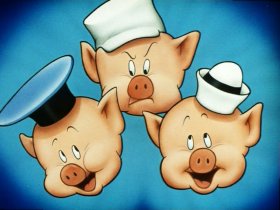
“ONCE UPON A TIME THERE WERE THREE LITTLE PIGS… .”

What I am calling clones have been called other names—“mirror characters” and “reflection characters”—but, whatever you call them, they are useful tools of the storyteller’s craft.

A “clone” in story terms is a tool for showing, not telling. Clones are characters in your story that represent what could, should or might happen to the protagonist if s/he takes a particular path.

Two of the Three Little Pigs are clones. It is the failure of the first two pigs that allows us to measure the success of the last pig. This is a simple use of clones, and one of the most obvious to see.

But clones exist in more complicated stories as well. In J.R.R. Tolkein’s Lord of the Rings, the pitiful character of Golem is used to show what might happen to the hero Frodo if he is seduced by the power of a magic ring. Just as in the story of the three pigs, we measure the success of one character by the failure of another.

In Tootsie, the woman who is the object of Dustin Hoffman’s desire is dating a lying womanizer. In one scene, Dustin, as a woman, confronts the womanizer and tells him that he understands his womanizing ways better than he thinks. This is a way for Dustin to “see” and confront himself.

The television show ER uses clones to great effect. Often a character will have a problem that is then mirrored by a patient. If a doctor has a drinking problem, for instance, the next thing you know she is treating a drunk driver. With that, she, and we, see what might happen if the character doesn’t change her ways.

Going back to The Wizard of Oz, all three of Dorothy’s companions are clones. They, like she, are looking for something they already have. Having clones is a way of dramatizing ideas; again, a way of showing instead of telling. As I said earlier, the audience sees that the Scarecrow has brains from the very first scene and it is reinforced throughout the story. Perhaps you may remember the line, “Don’t cry, you’ll rust again,” said to the Tin Man. Hmm, turns out he does have a heart, after all.

Wednesday, October 19, 2005

RITUAL PAIN part 3


The Apartment has two characters who change, but they both learn essentially the same lesson.
Because change is never easy, and is resisted, it is your job as a storyteller to apply as much pressure on your characters as possible. You must back them into a corner and force them to change. Make it as painful as you can. Bring them to the brink of physical or emotional death if you possibly can. Your protagonist will be measured by the size of her struggle, so don’t pull any punches.
Those who believe in reincarnation believe that we die and are reborn until we learn whatever we were sent to learn in life. When we finally attain wisdom, we ascend to a higher plane of existence. We are rewarded.
You don’t need to believe in reincarnation to see this idea played out. Many of us know people who repeat the same mistakes over and over in their lives. They might, for instance, keep dating people who disrespect them. Until they realize that they bring this on themselves, they will never be happy. They will never get their reward.

Groundhog Day is a great example of this concept in story form. Bill Murray is, in a sense, reborn every day. At one point he even tries to kill himself to get out of this cycle, but it doesn’t work. It is only when he starts to focus on things outside of himself, and becomes a better person, that he is able to reap his reward. He then “ascends” and is able to move on to a higher level of existence.

A character always knows what he wants, but hardly ever what he needs. In the end, the character usually gets close to what he wants and chooses the need instead. For example, in Casablanca, Bogart gets the girl—the very thing he’s wanted through the entire story. But he tells her to go with her husband. His need is to get over Ingrid Bergman. When he is holding tightly to his want he is a bitter, selfish man. He even says, “I stick my neck out for no one.” In the end, he risks his neck to assure that the woman he loves can leave with her husband. We know he is a better person. He has grown. He has ascended.

In The Apartment, Jack Lemmon gets the promotion he’s been after from the beginning of the story. But he is done compromising his self-respect, and turns down the job. He has ascended. This act helps him get his real reward, the woman he loves.

In E.T., Elliot wants his friend to stay with him, but helps him get home. He puts the needs of his friend ahead of his own desires. It is painful for him, but it is the right thing to do. Elliot ascends to a better place through suffering ritual pain.

Most viewers of E.T. are unaware that they are watching the transformation of a character from a selfish child to a caring human being, but they do feel it.

Ritual pain means painfully killing off one aspect of a character’s personality to make room for something new.

Character transformation and growth is one of the most powerful forms of invisible ink, and you would do well to include it in your work.

Tuesday, October 11, 2005

RITUAL PAIN part 2


James Cameron took what could have been a little B movie and made Terminator into a surprise box office hit. He put Linda Hamilton’s character, Sarah Connor, through the ritual pain of being hunted down and nearly killed. In the end she is transformed into a woman who knows that her life matters. She has also been hardened by the experience and seems less girlish. Grown up.

In Terminator 2, it is Sarah Connor who becomes the terminator. It is she who tries to kill a man for something he will do in the future. Through ritual pain she realizes that she has become the very thing she hates.

In Aliens, Cameron had Sigourney Weaver’s character, Ripley, is plagued by nightmares of the creature she had survived in the first film. Through the ritual pain of battling these creatures again, she purges herself of these nightmares and takes back her life.

Billy Wilder understood the power of character change so well that when the American Film Institute listed the top one hundred films of all time, four were his.

In Sunset Boulevard, Wilder had character Joe Gillis, an out-of-work Hollywood screenwriter, sell out for a little security and become the kept man of an older ex-movie star. He becomes her pet. In fact, when they first meet, the pet chimp of the has-been star has just died. It is no mistake that it is following this that Joe Gillis moves into the woman’s home. At one point in the film she dresses Joe in a tux—sometimes called a monkey suit. It is through the ritual pain of being a kept man that Joe Gillis learns that having a swimming pool isn’t worth selling out his principles.

This idea of selling out shows up again and again in Wilder’s films. In The Apartment, Jack Lemmon plays a man who, to climb the corporate ladder, lends his apartment out to adulterous executives at the insurance company where he works. Sometimes this means not getting into his own apartment and having to sleep in the park. He, of course, learns to stand up for himself.

Also in The Apartment, Shirley Maclaine plays a woman who is having an affair with one of the aforementioned executives. This idea of selling out, or prostituting oneself, hits hard when the executive, not having time to buy a Christmas present for his mistress, hands Shirley a hundred dollar bill as a gift. It is through the ritual pain of being made to feel cheap that Shirley learns to respect herself enough to be with a man who will commit to her fully.

RITUAL PAIN part 1


James Cameron took what could have been a little B movie and made Terminator into a surprise box office hit. He put Linda Hamilton’s character, Sarah Connor, through the ritual pain of being hunted down and nearly killed. In the end she is transformed into a woman who knows that her life matters. She has also been hardened by the experience and seems less girlish. Grown up.

In Terminator 2, it is Sarah Connor who becomes the terminator. It is she who tries to kill a man for something he will do in the future. Through ritual pain she realizes that she has become the very thing she hates.

In Aliens, Cameron had Sigourney Weaver’s character, Ripley, is plagued by nightmares of the creature she had survived in the first film. Through the ritual pain of battling these creatures again, she purges herself of these nightmares and takes back her life.

Billy Wilder understood the power of character change so well that when the American Film Institute listed the top one hundred films of all time, four were his.

In Sunset Boulevard, Wilder had character Joe Gillis, an out-of-work Hollywood screenwriter, sell out for a little security and become the kept man of an older ex-movie star. He becomes her pet. In fact, when they first meet, the pet chimp of the has-been star has just died. It is no mistake that it is following this that Joe Gillis moves into the woman’s home. At one point in the film she dresses Joe in a tux—sometimes called a monkey suit. It is through the ritual pain of being a kept man that Joe Gillis learns that having a swimming pool isn’t worth selling out his principles.

This idea of selling out shows up again and again in Wilder’s films. In The Apartment, Jack Lemmon plays a man who, to climb the corporate ladder, lends his apartment out to adulterous executives at the insurance company where he works. Sometimes this means not getting into his own apartment and having to sleep in the park. He, of course, learns to stand up for himself.

Also in The Apartment, Shirley Maclaine plays a woman who is having an affair with one of the aforementioned executives. This idea of selling out, or prostituting oneself, hits hard when the executive, not having time to buy a Christmas present for his mistress, hands Shirley

Tuesday, October 04, 2005

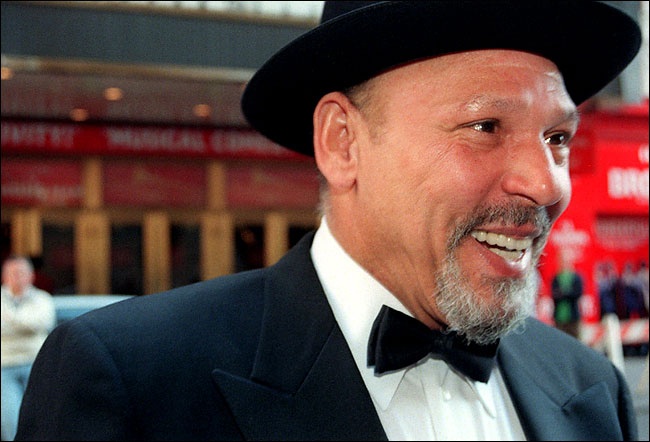
What August Wilson Taught Me About Being A Writer


When I first met August Wilson, I thought, Here is a guy who can help me understand my craft. I was in a little mall on Seattle's Capital Hill and I looked over and there he was – a living legend. Mr. Wilson, as I called him then, was reading the paper and standing by himself. He was arguably America's greatest living playwright and undoubtedly the most successful African-American playwright ever. He was internationally respected and almost any dramatist would give anything to be standing where I was at that very moment; I decided that I could not let this opportunity pass by. I approached him nervously and asked if he was August Wilson. He looked at me like I was going to serve him a subpoena and nodded. I told him what I would witness many people telling him over the years: that he was great and his work was great, etc. He'd heard it all before and was polite, but didn't seem to want to talk about himself. August Wilson was not a self-centered man.

Over the next few years our conversations became longer. He was not just an interesting man – he was an interested man. He was much more at home talking to people about themselves than having them gush over him.

He even became a fan of my work. (It's still weird to write those words down.) He really liked a film I made called White Face and dashed across a busy street to tell me he had seen it and how much he liked it. He went on and on laughing and reciting lines from the film. From then on he treated me like a peer. I mentioned the story structure class that I teach and he suggested that he should take it. I was blown away. I said, "You have two Pulitzers to my zero! Why would you want to take my class?"

He told me a story about a guy he knew who had once met the great jazz saxophonist John Coltrane. The man sheepishly mentioned to Coltrane that that he too played the saxophone. Coltrane's response was: "What can you teach me?" August wanted to know what I could teach him. In fact, once I was on my cell phone and August approached and hovered around until I got off the phone. He then asked me for advice on his new play. I told him what I thought and he took notes and listened.

At first I thought I was part of an exclusive club, being friends with August Wilson. As it turned out, August was there for anyone who was courageous enough to approach. He made friends (real honest-to-goodness friends) with passing homeless people and crack addicts. He knew things about their lives that when revealed made these street people into three-dimensional human beings. Most of us avoid even making eye contact with these people, but August Wilson would engage them in conversation.

Of the people August would meet almost every morning for coffee, I was the only writer. He was not a cliquish man. Anyone was welcome into the circle. August Wilson was not the kind of writer who observed life without getting involved in it. He was both an observer and a participant.

When I first met August Wilson, I thought he would teach me about the craft of writing, but he ended up asking me more questions than I ever asked him. What I realize now is that he was teaching me that a writer is always learning and willing to learn. He taught me that living life is the best way gather material. He taught me that the crack addict on the street may teach you more about life than a college professor. He taught me that you can ask of anyone you meet: "What can you teach me?" He taught me that if you reach for the humanity in others that you will find it within yourself. All of these things will make you a better writer, and a better human being.

August Wilson died Sunday, October 2, of liver cancer.

Friday, September 30, 2005

RITUAL PAIN part 1


“EVERYBODY WANTS TO GO TO HEAVEN, BUT NOBODY WANTS TO DIE.”
—Blues song lyric

A few years ago, when I was working on a spec screenplay that involved gangs, I visited a school with a lot of gang activity and asked the kids about how gangs worked. One of the things that I found out was that in order to join a gang you had to be “jumped” in. What that means is that you let the other gang members beat the crap out of you for a proscribed amount of time, anywhere from two to five minutes. After that, you are a member of the gang.

This sounded so barbaric to me. I didn’t understand why anyone would allow himself or herself to be abused in this way.

A couple of years after that, I was writing a comic book that had an Australian Aborigine as one of the main characters. While doing research, I read about one tribe that would knock one or two teeth out of adolescents as part of their initiation into adulthood.

I thought back on years earlier when a good friend of mine was rushing a fraternity. I could have never let myself be humiliated the way he allowed himself to be.

I began to see a pattern—groups of men or boys all have some kind of harsh initiation into their fold. It doesn’t seem to be anything that has to be taught; it appears to be inherent behavior.

Later, I was talking with an African shaman who lived in my neighborhood and he began to talk about the manhood ceremony in his village. He talked about tribal peoples all over the world having similar ceremonies that involved what he called “ritual pain.” Sometimes it is ritual scarification or tattooing. Sometimes it is a solo hunt for a ferocious beast. Other times it is to survive alone in the forest. In some cultures it involves a circumcision. Blood or the possibility of bloodletting is almost always part of the ritual. Like the street gangs say, “blood in, blood out.” Meaning that you must undergo the pain to get into, or get out of, a gang.

In all cases, the purpose of this ritual seems to be about tearing the individual down and then transforming them from boyhood to manhood. At the end of the ritual they are considered full-fledged members of the group with the rights, privileges, and responsibilities of an adult of said group.

I asked the shaman about women, and he thought that women don’t usually have these kinds of ceremonies because they have a natural bloodletting that signifies their transformation from girls to women. Plus, they often have blood and/or pain when they lose their virginity. And we all know that there is pain in childbirth, and that does certainly change a woman. There is female circumcision, but it is imposed by men on women; therefore, it is not included here.

I started to think of this idea in story terms. The second act is a kind of ritual pain that changes your character. Usually your character has what has been called a fatal flaw. There is something they need to learn before they can be transformed into a better, more mature, person.

What is it that Elliot’s brother says to him in E.T.? “Why don’t you grow up and think how other people feel?”

We are all resistant to change. There is an old blues song that contains the lyric, “Everybody wants to go to heaven, but nobody wants to die.”

There is more than likely something about yourself that you would like to change or that you should change but it is too difficult. I don’t know why the world works this way, but the things we should do are always the most difficult. So we rarely run toward change. This is true of your characters as well.

In Toy Story, Buzz Lightyear won’t believe that he is a toy and not a space ranger. Also in Toy Story, Woody has to learn to share the affection of his owner with Buzz. When you see the film again, you’ll see that this transformation is not an easy one for them, but they are better “people” when they do change.

In Toy Story 2, Woody is in danger of being discarded and meets Jesse, a clone, who tells him what his fate might be. It is painful for both of them, but they both realize that they have value.

Understanding story allowed Pixar to make one of the few sequels that measures up to the original. John Lasseter and the people at Pixar understand story as well as anyone. Study these films.

Look at Jaws again. Take a man afraid of the water, subject him to the ritual pain of doing battle with a shark, and that pain transforms him. Cures him.

Thursday, September 22, 2005

TELEVISION - THE FIRST THOUSAND YEARS


I once saw a TV guide, or something, that claimed to list the top shows of the millennium. Since TV wasn't around until 1948 that left around 950 years of programming that could not qualify simply because there was no way to broadcast it. I thought this was unfair, favoring shows in the 20th century, so did a little research and decided to add my historical shows to the list.
This list is not chronological.
SHOW: INQUEST P.O.P.E._STATION: THE TRINITY NETWORK_This hour cop drama dealt with the trials of the boys in The Spanish Inquisition. Storylines had the characters cracking down on heretics who worked on the Sabbath or were of the Jewish faith and other such heinous crimes against God. Critics praised the show for it's gritty look achieved by the revolutionary technique of using hand-held candles.
SHOW: POCKET FULL OF POSIES _STATION: BLACK DEATH NETWORK _This popular game show took people stricken with the plaque and put them before contestants who would then wager on which would die first. Winners could receive valuable prizes such as a stale loaf of bread, rancid wine or a year's worth of bloodlettings.
SHOW: MASON AND DIXION _STATION: THE UNION NETWORK_Despite its being unpopular this show about brother fighting brother ran for four years and employed a large cast. This cutting edge show dealt with such hot topics as miscegenation and whether "The Negro" had the intelligence to vote.
SHOW: THE WITCH HUNTERS _STATION: COLONIAL NETWORK _This nighttime teen soap was the Buffy the Vampire Slayer of its day. The drama starred three teenaged girls who had the power to spot people who worshiped Satan. The accused would be set afire, drowned or weighted down with stones until dead. The genius of the show was that no one was safe. The suspense of who would be next to die kept the audience, and cast, on their toes.
SHOW: MANIFEST DESTINY _STATION: THE NEW WORLD NETWORK_A popular adventure series about the genocide of the indigenous people of the Americas. Young boys tuned in each week to see their hero, Chris Columbus, cut of the noses of those thieving San Salvadorians. Or to see Ponce de Leon run a red man through with his sword for not knowing the location of the mythical Fountain of Youth. Because the show was so popular with younger viewers the network received many letters from angry parents regarding the violence - they wanted more. The network honored the request and received such high ratings that the show ran for 500 years.
SHOW: THREE HUNDRED'S A CROWD _STATION: TRIANGLE TRADE NETWORK _A very popular sitcom about the hilarious goings on board an American slave ship. The show's plotlines usually hinged on misunderstandings, since the slaves chained together didn't speak the same language. This long running show lasted over two hundred years!
SHOW: THE NEWCOMMERS _STATION: THE LIBERTY NETWORK_This comedy pokes fun at immigrants who came to America seeking a better life, but who have a strange way of talking and dressing. But the real comedic irony comes when those who were immigrants just a few years before behave as if they've been in America all long and treat the newcomers like they don't belong. Amazingly, this show is still running today.
SHOW: THE CRUSADERS _STATION: THE HOLY CITY NETWORK_This hour long army show took full advantage of exotic locations as the shows plot revolved around the taking back of the holy land from those infidels the Turks. Despite many cast changes, this program ran for generations.
SHOW: CAMP MANZANAR _STATION:: THE CONSTITUTION NETWORK _A wacky sitcom about a group of Japanese-Americans who had their rights, property and dignity taken away by the government. This show was largely ignored by Americans and is all but forgotten now but, at the time, had its devoted fans who fought to keep it going.
SHOW: LI'L JIMMY CROW_STATION: THE CONFEDERATE NETWORK _The show followed the humorous misadventures of a cute little black boy who didn't quite understand his place in the world and so tried to do all the same things other children did, like using a public restroom, looking a white person in the eye or be treated like a human being. Although not as popular in the North, this show lasted well into the 20th century. It had a way of making some people feel better about themselves.
Don't worry if you've never seen these shows, if I know my history, most of them will be in reruns in one form or another.

Sunday, September 18, 2005

dramatization and armature


The following is a story by Aesop.

“BUNDLE OF STICKS”

Once there was a farmer with many sons whose sons were always bickering and fighting with each other. One day the farmer called his sons together. He had with him a bundle of sticks tied together.

He commanded each son to take the bundle and break it in half. In turn they tried and failed. The farmer then untied the bundle, handed each son a single stick and told them to break them now. Which they did so with ease.

“You see, my sons,” said the farmer, “if you are of one mind, and unite to assist each other, you will be unaffected by all the attacks of your enemies; but if you are divided among yourselves, you will be broken as easily as these sticks."

Armature (Moral): In unity there is strength.

Aesop lived nearly 3,000 years ago and his stories are still told. Not only are they told they thrive. They are part of our everyday lives. Everyone knows what we mean when we say someone is a wolf in sheep’s clothing. Or if we say someone has sour grapes. Or if we say of someone that he/she is crying wolf. All of these sayings are from Aesop’s stories.

Why have stories told so long ago stuck around? It is because they had something to say about living as a human being in society, and people haven’t changed much since 600 BC. And believe me, as long as there are people, we will have the same problems we have always had.

Aesop’s armatures are often called morals, but whatever you call them, it all boils down to the fact that he had a point. Not only that, but he dramatized his point. The farmer in the “Bundle of Sticks” story demonstrates his point to his sons rather than just telling them. This also demonstrates Aesop’s point to the reader.

Just as with a joke, these short-form stories have no excess elements. Remember that this is true of any well-crafted story, regardless of length.

I included this story to dramatize the ideas of dramatization and armature.

Thursday, September 08, 2005

THE ARMATURE Part 6


The success of There’s Something About Mary was a film that sent Hollywood rushing to produce toilet-humor comedies. But the Farelly Brothers had made other “shock-comedies,” why did this one become a mega-hit that almost everyone seemed to love? I thought the film was so good I saw it three times in the theater. If you knew me, you’d know that I like few films. And I certainly don’t like sophomoric humor. So again, why this film? It had an armature.

I don’t believe that audiences care much about the genre of a story; they just want to be moved in some way. And they respond over and over again to stories with an armature. In Something About Mary, Ben Stiller’s character is dishonest to Mary and to himself. He is a stalker, and until he realizes it, he is not worthy of Mary’s love.

A film like James Cameron’s Terminator would seem, on its surface, to have a flimsy armature, but it really has something meaningful to say. If you recall, Sarah Conner was an ordinary 20th-century woman with a stressful low-wage job at a burger joint. In the first act of the film, Sarah is having a particularly bad day at work when her coworker says to her, “Look at it this way, in a hundred years, who will care?”

As it turns out, Sarah’s life is about to be turned upside down. A robot from the future has been sent back in time to kill her, to prevent her from giving birth to her son, who is a threat to Skynet (the computer that rules the future earth). She is, according to the film, one of the most important people ever born. So, this mundane life that she lives does, indeed, matter. In a hundred years, everyone will care who Sarah Connor was.

In the Wizard of Oz the armature is stated: “There’s no place like home.” But it might more accurately be said: “You may already have what you are looking for.” How do we know that this is so? Is it because it is said? No, it’s because it is dramatized.

Remember that your armature is the foundation that holds up your story. Everything hangs on top of it. Every decision you make should be based on the idea of dramatizing your armature idea.

Friday, September 02, 2005

The ARMATURE Part 5


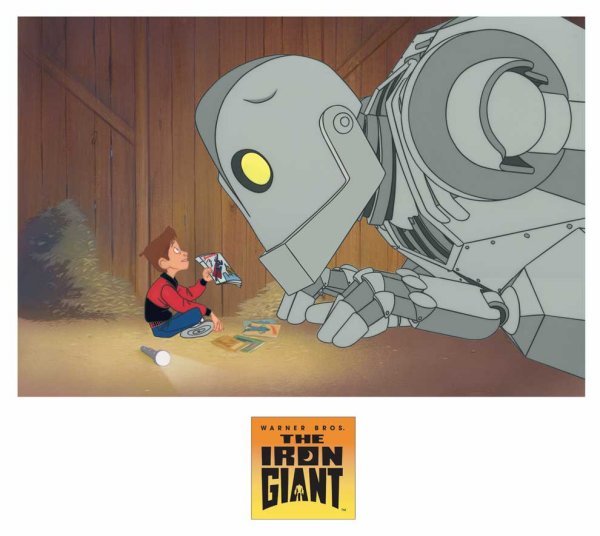
The Iron Giant is an amazing animated film directed by Brad Bird. On its surface, this film is like E.T. in many ways. It is about a boy who befriends a being from outer space (in this case, a giant robot). And, as in E.T., the government is seeking the alien. So what’s different about it, you might ask. It’s the armature. As a matter of fact I heard very few people compare the two films. They each had something different to say, so the similar stuff on the surface didn’t matter much.

In the story of The Iron Giant, the robot is damaged when it gets to earth. Later, after befriending the boy, the kindly robot remembers that it is programmed to be a weapon of mass destruction. In fact, it nearly vaporizes the boy by accident. Now, the robot has an internal conflict. Will it give in to its programming (its nature) or rise above it? From what I understand, when Mr. Bird pitched the story, he said, “What if a gun had a conscience and didn’t want to be a gun anymore?” That was his armature. In the film it is stated this way: “You are who you choose to be.”

Friday, August 26, 2005

THE ARMATURE Part 4


There is an old piece of advice usually given to someone about to give a speech:
Tell them what you’re going to tell them. Tell them. Tell them what you told them. This is no different for storytellers. In fact, those three bits of advice could represent the three acts. But just how do you put this into practice? How is your armature put together?

First, you must know where you are going or you will never get there. Then you must let the audience know where you are taking them. You show them the armature—the idea you want to build on. One way this is done is to have a character state out loud what you want to say with your story.

In E.T. The Extra-Terrestrial, when Elliot says something hurtful to his mother, Elliot’s older brother gets angry at his insensitivity and yells, “Damn it, when are you going to grow up and learn how other people feel for a change?” What happens next is that Elliot meets E.T. And one of the first things that happens is that when E.T. becomes sleepy, so does Elliot. Then when E.T. is hungry, so is Elliot. When E.T. drinks beer Elliot gets drunk, too.

Later, when Elliot introduces E.T. to his brother, he says, “I’m keeping him.” This without any regard for what E.T. wants. But he is beginning to empathize with others as is evidenced in the scene in which Elliot feels for the frogs in his science class, and sets them free before they can be dissected. By the end of the film, Elliot “feels what other people feel,” enough to send E.T. home even though he will miss his friend. Everything in the film is built on the armature stated by Elliot’s brother at the beginning of the story.

Thursday, August 18, 2005

THE ARMATURE Part 3


The first thing you must do to get your point across is to understand what you want to say. I know that sounds simple and obvious, but I almost never meet writers who know what they want to say. Mostly what they want is to say something deep and profound that no one has ever said before, but they don’t know what that is. Or they want to say a thousand things in one story, not realizing that to say too much is to say nothing at all.

I was once reading an interview with animation director Chuck Jones in which he talked about animating young animals versus old animals. He had observed that a puppy, for instance, would expend excess energy to perform simple tasks. This results in those floppy movements we associate with young mammals. In contrast, adult animals are more economical. Think of the clumsy hunting style of a kitten versus the precision of an adult cat. I have noticed this same thing with story crafters. Writers with the least experience and skill think that the more complicated something is the better. But like a kitten their work comes off clumsy and unfocused. If you want to come off like a mature writer, be precise.

Thursday, August 11, 2005

THE ARMATURE Part 2


Why is it that some stories stick with us, while others are soon forgotten? Having a point gives your stories resonance. Do you recall the saying, “A fool speaks because he must say something and a wise man speaks because he has something to say?” This is true when one is crafting a story as well.
Let’s look at the story of King Midas. If you recall, he was a king who loved money above all else, or so he thought. He was granted a wish that all he touched would turn to gold. This was great until he touched his daughter and she was turned to gold. The king learned that some things are more important than money.
One way to look at your armature is what is called, in children’s fables, “the moral.” The armature is your point. Your story is constructed around this point.

With King Midas, the storyteller wanted to teach people that some things were more important than money. What were his tasks as a writer? First, he had to create a character who was greedy. Then he needed to set up a situation wherein the character gets what he wants. Then he needed to turn this wish into something that would teach the character a lesson. Everything in this story is designed to make the writer’s point. This should be true of your work as well.

Some of you may think this definition of theme too simplistic. It must be harder than this, you think. It isn’t. You are also worried about being perceived as too preachy. Over the years, I have encountered many students concerned with being too preachy or blatant, but never one who was afraid of not being clear enough or that their point would not be understood.

Thursday, August 04, 2005

THE ARMATURE Part 1


Because of my past work at make-up effects houses, I’ve known a few sculptors. When they begin sculpting in clay, they first build an armature to act as a skeleton; otherwise, the piece would not hold its shape. It might look good for a while, but would soon collapse.
When an admirer of art looks at a sculpture, she never sees or even thinks about the armature that gives the piece its structural integrity. It is invisible, but as much a part of the sculpture as the outside.
Before you begin writing, you too must build an armature. For us story-crafters, the armature is the idea upon which we hang our story. It is what has been called theme, but I find that the word theme is not descriptive enough and leads to confusion; I have found in teaching that many people bring a lot of baggage to the table when I address theme.

What is an armature, then, when talking about story craft? It is what you want to say with your piece. I was once talking to a friend who was complaining about a producer wanting to change a scene in his script. My friend was angry because the change had nothing to do with his “theme.” He said, “My theme is competition. And the change has nothing to do with competition!” I didn’t say anything at the time, but my friend was confused. There is an old joke about marriage that goes, “Marriage is not a word, it’s a sentence.” It’s the same with theme. My friend had nothing to say about competition. “Competition” is not a theme. A theme (or armature) might be, “Competition is sometimes a necessary evil.” Or, “Competition leads to self destruction.” Saying that your theme is competition is like saying your theme is “Red.” It really says nothing at all.

Thursday, July 28, 2005

WHY WE TELL STORIES

A fool speaks because he must say something and a wise man speaks because he has something to say. – Old Saying

I believe there is one primary reason human beings tell stories: To teach.
Consider this: There is no culture on the globe that does not have stories. We all have music and we all have stories. They are part of us. I have read about aboriginal tribes in Australia who use songs and stories in case they get lost. These songs contain information like a map. So if you know the words to a particular song, you can, for instance, find water in an unfamiliar area because you know the song for that area. Our brains seem to retain information this way. Besides saving lives, stories can also tell us how we should live.
In Bruno Bettelheim’s book, The Uses of Enchantment, he tells of the traditional Hindi medical practice of giving the patient a story to contemplate. Through this story the patient would learn from the hero’s failures and victories how to deal with and resolve his/her own problem.
This may sound like a foreign concept, but we use this even today in Western culture in the form of Alcoholics Anonymous and other twelve-step programs where people share their stories in order to help themselves and others. This simple act of sharing stories helps the healing process. People learn that they are not alone in their struggle and that others have been through these addictions and survived. They may also learn things to watch out for in their own behavior to avoid falling back into old destructive patterns. Stories teach us how to live. Your story should teach me how to live.

Friday, July 22, 2005

WHAT IS INVISIBLE INK?


"There is no art which does not conceal a still greater art." – Percival Wilde


Often when I listen to how people evaluate stories, I hear them talk about dialogue. When they talk about “the script” for a film they are often talking about the dialogue. Or when they mention how well a book is written, they most often mean they way the words are put together—the beauty of a sentence.

When people speak of Shakespeare’s work they almost always talk about the beauty of the language.

These are all forms of “visible ink.” This term refers to writing that is readily “seen” by the reader or viewer. They often mistake these words on the page as the only writing that the storyteller is doing.

But how events in a story are ordered is also writing. What events should occur in a story to make the teller’s point is also writing. Why a character behaves in a particular way is also writing.

These are all forms of “invisible ink,” so called because it is not easily spotted by a reader, viewer, or listener of a story. Invisible ink does, however, have a profound impact on a story. More to the point, they are the story itself. Invisible ink is the writing below the surface of the words. Most people will never see, or notice it, but they will feel it. If you learn to use it, your work will feel polished, professional, and it will have a profound impact on your audience.