Monday, February 27, 2006

DIALOGUE part 4 (ADDRESS AND EXPLAIN)


This is related to “address and dismiss” but serves a different function. The best example is in the first Star Wars, when Luke Skywalker sees the Millennium Falcon for the first time. After it was revealed, a hush came over the audience as they took in the magnificent ship. Then Luke exclaims, “What a piece of junk!”

The crowed erupted with laughter, because that’s not at all what we were thinking.

This was George Lucas’ world and we knew nothing about it. There is no way we would have known that the ship was considered a piece of junk without that clever bit of dialogue.

One of the things that drives me crazy when people talk about “good dialogue” is that they never talk about how well it’s used, only how it stood out. Some of the best dialogue is quiet and subtle and reveals things about plot, theme, or character, with the precision of a surgeon. Sometimes that means it’s not quotable, but quotable dialogue is not the primary job of a storyteller.

Tuesday, February 21, 2006

DIALOGUE part 3 (ADDRESS AND DISMISS)


The first time I noticed this technique, I was watching John Carpenter’s The Thing. In the film, an alien creature with the ability to assume any form terrorizes a group of men in an isolated research base.

In this particular scene, the alien has assumed the shape of one of the men, but then begins to distort. The neck stretches impossibly and tendons snap. The head detaches from the rest of the body as the other men watch in disbelief. The head, now upside down on the floor, sprouts spider’s legs and grows two antennas with eyes on the ends. Even for this film, it was almost too much. They had reached the outer bounds of their reality. Just then one of the men says, “You gotta be fucking kidding.”

This kind of dialogue can save you when you think you may lose your audience. Sometimes audience members need a representative within the narrative. It allows you to address and dismiss their concerns so that they can stay engrossed in the story.

A very famous “Address and Dismiss” is in Butch Cassidy and the Sundance Kid, when they are trying to escape the super-posse by jumping off a cliff into a river.

When Sundance admits he can’t swim, Butch laughs and says, “Well, hell, the fall will probably kill you!”

This example cuts the audience off at the pass, so to speak, before they can say, “Give me a break, there is no way they could make that jump!”

In Tootsie, we must believe that the other characters believe Dustin Hoffman is a woman. There are many comments made by other characters about how unattractive Tootsie is. This is an excellent use of “address and dismiss.”

All of these examples get laughs from the audience. I think it’s because it’s another kind of truth-telling. It’s a tricky tool because it could pull people out of the scene. It is a kind of wink to the audience that lets them know the storyteller knows that maybe she’s gone too far; but when used correctly, it is seamless—invisible.

Friday, February 10, 2006

DIALOGUE part 2 (SOUNDING NATURAL)


Over the last few years, I have noticed that every character I read, or see in the movies or on television, sounds like another movie or television show. Real people don’t talk like movie people. Listen to how people speak. They didn’t all grow up in your neighborhood, nor do they all have your educational background.

Because I’ve worked in both animation and comic books, I know a lot of illustrators. One of the things that I learned is that the good ones always do life-drawings. They learn to draw the human figure from looking at a human figure. Sounds obvious, huh? Well it’s not. Many comic book artists learn from copying other artists. These people are never as good of draftsmen as their life-drawing counterparts. They will often hear the advice, “Draw from life.” This is good advice for us all.

When you write dialogue, or anything else, think of yourself as a puppeteer. You are hiding under the table; you don’t want anyone to be thinking of you. You want their attention on the puppet. Once they are thinking of you, you’ve lost them.

This does not mean you can’t have a character say witty, funny, smart, profound things, but it had better be the character talking, not you.

As a storyteller, your job is to get out of the way of the story. This isn’t about you. It may be about what you have to say, but it isn’t about you. Let go of your ego.

Wednesday, February 01, 2006

DIALOGUE part 1


My barber wants to make a film. He wants to write a screenplay, so he wants to know the format. He figures that once he knows the format, he’s set. There is nothing else to know, right? As he said to me, “I already know what I want people to say.”

Most people are under the impression that scriptwriting is coming up with dialogue. Most critics seem to think this as well. They will go on and on about dialogue, but they know nothing about drama, or how it is structured.

I feel like dialogue is talked, and written about, way too much. It is the writing that people can see, so they focus on it. Of course, you know, now, how much more there is to story construction. But I suppose I must write a little about dialogue.

Remember that invisible ink is the writing below the surface of the words. This invisible ink keeps the audience’s brains active. Subtext is a kind of invisible ink. The dialogue exchange that follows is something I heard at a friend’s house, over a Christmas breakfast, between a mother and her grown daughter.

Mother: You sound hoarse.

Daughter: Yeah, I had a cold. It’s going away, now.

Mother: You should take care of that. How long have you had it?

Daughter: I’m fine. It hung on for a while. I’m fine.

Mother: It’s going away? You taking anything for it?

Daughter: I’m okay.

There is nothing unusual about this conversation. But here’s the thing: The daughter’s husband had recently died of AIDS. The daughter also had AIDS, but was not yet showing any signs of the disease. Read the exchange again with that in mind. That’s subtext. That’s invisible ink. Lots is being said, but not spoken.

Subtext is all in the set-up. Once you establish that two characters hate each other, for instance, all you need to do is put them in the same room together and have them talk about the weather—the audience will do most of your work for you.

Dialogue is a tool, and just like any tool, you use it when you need it. It can be used to define your armature, give essential plot information, or reveal character. If it isn’t doing that it isn’t doing anything.

Wednesday, January 11, 2006

The Strange Case of Sherman Alexie


I was once asked to give a talk about storytelling to a convention of high school media students with Native-American writer Sherman Alexie. The problem was no one told Sherman, so he spoke the entire time. That worked out perfectly for me because I got a great story out of it.

Sherman doesn’t believe in formalized story structure, he believes that it is a Hollywood construct. He began his presentation by saying that there was no such thing as three-act structure and such thing as a happy ending. He said that life doesn’t work out that neatly. He then went on to say that he could not teach them to write, but he could tell them how he became a writer. He said that when he was a kid on the reservation he was sick most of the time, so he spent most of his time reading. He read every book in the reservation library and when he was done he started over and reread them. Most of the people he interacted with were doctors and health care professionals so he wanted to be a pediatrician when he grew up.

When he was old enough he enrolled in school and began taking premed anatomy classes. In premed anatomy students must work with actual corpses. The first day this was to happen the cadaver was unveiled and Sherman fainted. He thought that maybe he should be drop the class. His teacher convinced him to stay. So another day while he was working on a body it farted and Sherman fainted. He decided again that he should quit, but was again persuaded to stay. But he again fainted while working on a body and actually decided to drop the class.

He then had a hole in his schedule and didn’t know what to do or what the future held for him. He saw that there was a poetry class and he had always liked poetry so he signed up for the class.

Sherman said that he had never read poetry by an Indian before. He didn’t even know Indians wrote poetry – he had only read poems by dead white people. His teacher showed Sherman wonderful poems written by people who shared his background. This was great.

At one point the students where asked to write poems and give them to the other students to take home, read and evaluate. The next day Sherman was one of the first to arrive to class. As he sat there a female classmate came in and began to talk to Sherman and praise him for his poem. She went on and on about how much she liked it. Then another woman chimed in with her gushing praise, and another, and another. Soon he was surrounded by women telling him how good he was. “That", he said, “is how I became a writer”.

What struck me about this story was that Sherman preceded it with the statement that there was no such thing as three-act structure and no such thing as a happy ending. This was not reflective of real life, he said. Then he told a story from his real life that had three acts and a happy ending. If you go back and look I’m sure you’ll be able to identify the acts.

Wednesday, January 04, 2006

We Live in the Dark Ages part 2


The more I talk about, and teach, structure the more I see that people have a fundamental misunderstanding about what it really is. Story structure is not an edict from on high, which says, ‘One must tell stories like this!’ It is more basic than that – it is the way people naturally tell stories. And storytelling is as natural to human beings as language itself.

Here are the three parts of drama:

Proposal
Argument
Conclusion

Each of these parts represents an act in three-act structure. You use this structure every day. We all do.

A story is the telling, or retelling, of a series of events leading to a conclusion. People have an instinct for story -- we know what one is and we know all of the rules. Our intellect fools us into thinking that it can be many things. But we know that isn't true in life.

Here's how people tell stories. This is from a book I was reading about hypnosis. The author wanted to make a point about how diverting your attention away from pain can lessen the pain. This is how it appears in the book:

A Lesson in psychology from a veterinarian. My daughter once owned a cat
which I took to a vet for shots, two of which are given a week apart. The
assistant took the kitten on the first visit. He placed the kitten on the table and
reached for the syringe. The animal sensed something unpleasant was about to
happen and began to struggle and yowl. The assistant asked me to help hold
the cat. I grasped it's legs while he held its head with one hand and inserted
the needle in it's back with the other. As he gave the injection the kitten
wailed loudly in pain.

The next week the older veterinarian took it. As I placed it on the table I
asked he wanted me to help hold it. "On no, " he answered, "that's not
necessary. Putting his hand behind the kitten's head he began to bump its nose up
and down on the table while he reached for the syringe with his other hand.
Deftly inserting the needle, he gave the injection with the kitten not even
whimpering. It was too busy wondering what was happening to its nose to feel pain.


This is the way we all use stories everyday. The man telling the story knew instinctively about three-act structure. He used clone characters for comparison. He never strayed from his point. And he we understand his point clearly. This how people talk, that is why stories are the way they are. The structure is natural for us. The teller of this story stated his proposal as “A Lesson from a Veterinarian”. He then went on to prove, or argue, his point and he concluded by summing up his meaning. Take any event from this story and it becomes unclear.

I often here the argument that a good story is layered and has many points – that “my way” is too simplistic. Looking again at the veterinarian story, even though the writer had one point and made it, there are other things to be learned from it as well. He could use the same story to talk about the wisdom of age versus the inexperience of youth, for instance. A story told clearly and precisely will be full of wisdom without much effort by you to insert it.

Since such films as Pulp Fiction and Memento people have talked a lot about how these movies "redefined" structure because they were told out of sequence. People use them as evidence that those “rules” about structure are breakable. This is only proof to me that people do not understand structure. In real life we tell stories out of sequence all the time. We might say, "I got fired from my job today". Then we might follow by saying, " So my boss walks up to me...” This is telling a story out of sequence and people do it all the time. All of these “rules” can be observed every day in real life.

Tuesday, December 27, 2005

We Live in the Dark Ages


These are the Dark Times. This is, in my opinion, the worst time in the history of cinema. This trend toward bad films began around 1980. When I say this to friends they often say that I just like old movies and that they have always made bad films. They are correct that bad films have always been produced, but there were also a lot more good films and more than a few masterpieces. I offer this as proof of my point that when I was a kid people would go to the movies and expect them to be good and be disappointed when they were bad. Now people go the movies expecting them to be bad and are surprised when they are good. High praise for a film nowadays is someone saying, “It wasn’t as bad as I thought it would be”. How many times have your heard this or said it yourself?

Many things contribute to this trend, but at the top of my list is the death of the first act. The great screenwriter and director Billy Wilder said, “If you have a problem with the third act, the real problem is in the first act.”

Act one is of the utmost importance to story telling and is all but forgotten by modern storytellers.
What is act one? It tells the audience what the story will be about. Sounds easy enough, but still people choose not to write one, because it isn’t the meat of a story. Storytellers are impatient and want to get to the “good part” as fast as possible.

Sounds smart, right? But it isn’t. The “good part” of a joke is the punchline so I’ll just give you the good part of a joke:

The old man from the far-away country was taken aback and was silent for a long time.
As he got up to leave the subway train, he leaned over to the priest and said, "Mister, maybe you should wear your pants backwards."

Not that funny? But that’s the funny part. It doesn’t work because there is no context. Act one provides the context for a story. Everything that happens in the rest of the story somehow relates to act one. A well-crafted act-one can make or break a story.

If you have read the installments of this blog that deal with armature you will be familiar with this: Tell them what you’re going to tell them. Tell them. Tell them what you told them.

That is really the best definition for the three acts I have even seen. Today we are dealing with the “Tell them what you are going to tell them” part. That is act one. If your story’s point is that even a good man can be corrupted by power then your first act shows a good man without power. You must show that he is squeaky clean and even show him a situation where he could be corrupt and is not.

This is also where you let the audience know “the outer boundaries” of the reality of the story. E.T. starts with E.T not Elliot. Now the audience knows to expect aliens in this story. It’s a Wonderful Life starts with two angels talking so that the audience knows to expect a supernatural element. This all falls under “tell them what you are going to tell them”. The film Raiders of the Lost Ark begins with a big action sequence before we end up in Prof. Indian Jones’ classroom. We know there is more action coming because we got an outer boundaries scene. The storytellers told us what was to come.

The primary job of a storyteller is to communicate and a strong first act will help you to do that.

Monday, December 05, 2005

King Kong -- An American Icon


King Kong was one of my favorite movies. Until recently.

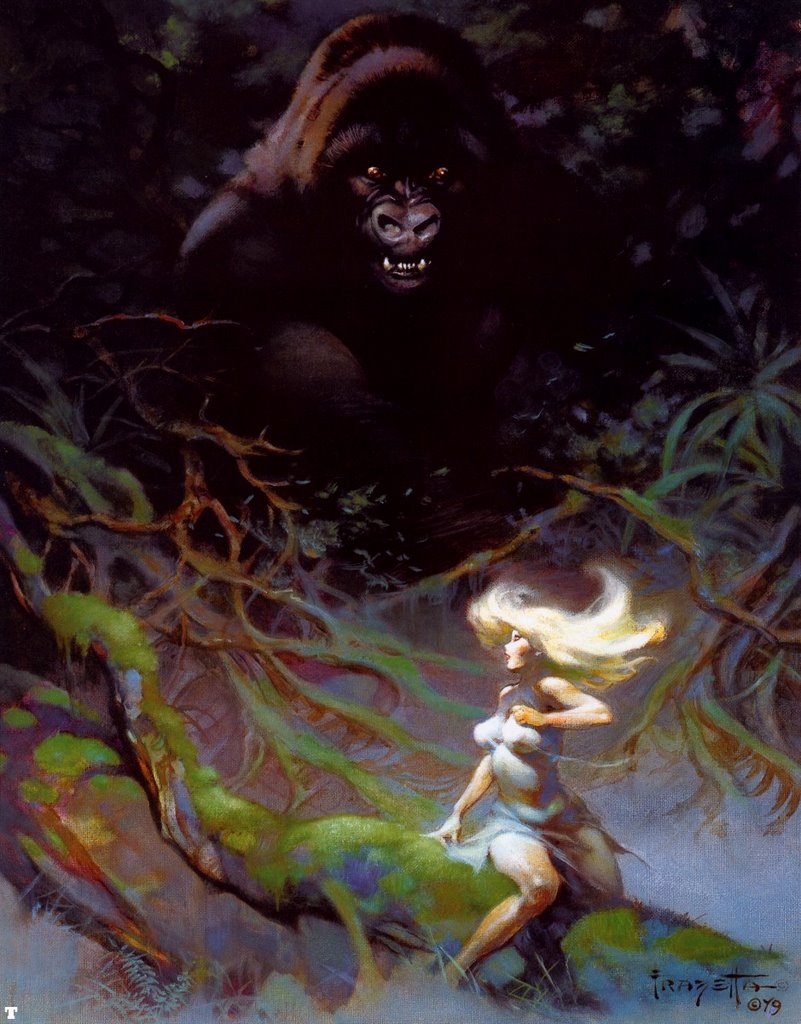
While flipping through a book on the making of the 1933 film, I saw a pre-production drawing: a white woman cowers in bed as a big, black gorilla reaches for her through the bedroom window. I wondered why the filmmakers decided that King Kong should find the woman in her bedroom. Something about this image disturbed me, so I decided to watch the film again.

King Kong is about a white man, Carl Denham, who sails to an island in search of something he can bring back to America that will bring him wealth. Along with the ship’s crew, Denham brings a young woman, Ann. He finds that the jungle island is populated only by black people. Denham and his men come across the black natives and witness a strange ceremony: some of the natives wear gorilla arms as they dance around a native girl. When the white men ask what’s going on, they are told that the girl is the bride of Kong. Spotting the white woman, the Chief asks the white men to trade the “Golden Woman” for six of his. He wants her for the bride of Kong. The white men refuse to hand over Ann, so the natives kidnap the woman and offer her up to Kong as a bride.

Kong, a giant gorilla, carries Ann to a mountain ledge, and after she has fainted, he starts to remove her clothing.

The white men manage to rescue Ann from Kong, and soon after, they capture Kong himself. Denham says that he intends to take Kong back to civilization to make himself and the crew millionaires.

Denham and his crew take Kong back to “civilization,” as Denham calls it. There, Kong is chained and displayed on a steel platform on a stage. Kong breaks free from the manacles biding his arms, neck and waist. He then goes on a murderous search through the city looking for Ann. By climbing a building and peeping into windows, Kong finds Ann in her bedroom with her fiancé. The woman faints across her bed. Kong reaches through the window, pulls Ann’s bed toward him, and carries her away.

As the ape carries Ann to the top of a skyscraper, she struggles to break free of Kong’s grip. Biplanes buzz Kong and he sets Ann down on the ledge to do battle with them. The pilots take this as their cue and riddle Kong with bullets. Kong falls to his death.

I submit to you that the character of King Kong is not just a movie monster, but a metaphor.

Look again at the story. When Carl Denham finds the black inhabitants of “Skull Island,” they are wearing arm extensions to make them appear ape-like. The effect is an eerie blend of man and animal. The natives are also preparing a girl to be the “Bride of Kong.” A strange thing for an animal to want a human mate, don’t you think?

The black Chief offers the white men six black women for the “Golden Woman.” One white woman is equal to six black women, even to black men. What does this imply about the worth of black women?

The white men refuse this offer and the black men kidnap the white woman. This seems to play on a major white racist fear. Does the term “stealing our women” sound familiar? This idea is strengthened when you realize that this theft takes place right after Ann and her white love interest share their first kiss. Now that Ann “belongs” to a white man, she can be stolen from him.

Ann is tied to an altar, which seems to exist expressly for offering Kong his women. We are given the impression that if Kong’s ravenous sexual appetite is not appeased, there will be hell to pay.

Kong takes his white “bride” to his cliff-side home, and after she faints, the “ape” begins to remove her clothes. This violation can be seen as rape.

The white men rescue Ann from Kong, and soon afterward capture Kong himself. Denham says that he’s taking Kong back to “civilization” to make himself rich. The act of taking Kong out of the jungle and exploiting him for money mirrors the slave trade.

“No chains will hold that!” says the ship’s captain. This prophetic statement echoes the idea of black anger at being held in bondage. He is saying that once you put them in chains, you’d better make damn sure that’s where they stay.

“We’ll give him more that chains,” declares Denham. “He’s always been king of his world, but we’ll teach him fear.” Denham calls Kong a king, which raises a few questions. We see no other apes on the island, so are we to assume that Kong is king over apes, or a king over the black natives? Is the film saying that black people are apes or that Kong is human?

Kong is taken by ship to America, put in chains, displayed in a theater. On the theater’s stage is a large platform similar to an auction block, upon which the shackled Kong stands for the theater audience’s inspection. Why was Kong put on the block? Aren’t all stages designed for easy viewing? Isn’t Kong large enough for the spectators to see already?

There are no black people that I could find in Denham’s “civilization.” Kong has gone from and all-black world to and all-white world one. Again, and echo of the slave trade.

Kong breaks his chains of bondage, and, once free, immediately goes on a murderous rampage through the city, looking for his white woman. Kong’s sexual appetite must be satisfied. He finds Ann in her bedroom with her fiancé. Seeing Kong, she faints across her bed. Kong reaches through the window, pulls Ann’s bed to him, and takes her. This is a playback of the earlier scenes where the black men took the white woman from her man, as well as the mountaintop “rape scene.”

Kong finds the city’s version of a mountain-a skyscraper-and carries Ann to its top, implying that the ape’s jungle ways are out of place in the city. The woman struggles to pry herself free of Kong’s big black hand, even though she is hanging hundreds of feet in the air, and falling would mean certain death. Death is preferable to being with a black beast.

After a battle with machine gun-equipped airplanes, Kong plummets to his death.

Denham says: “It wasn’t the airplanes. It was beauty killed the beast.”

Denham takes no responsibility for the murder of Kong. It was Kong’s own animal urges that killed him. The pilots only did what was necessary to protect the white woman from the black animal.

The references to Beauty and the Beast are made several times throughout the film. In that story, the beast was not an animal, but a man who only looks like a beast. Is this the film’s point; that Kong is really a man who looks and acts like a beast?

In reviewing the movie, what I saw confirmed my fears. What disturbs me about the film isn’t that the people feared King Kong, but why they feared him. Understanding why has brought me to a conclusion that not only images are burned into celluloid, but attitudes and beliefs as well.

No, King Kong is not just a movie monster, but a metaphor for black male sexual aggression as seen by America’s white racists.

Why is it important to talk about a film released nearly 70 years ago? Because I believe we still carry these images with us and that they affect us daily.

A few years ago, TV meteorologist Michelle Leigh at WDIV in Detroit proved my point. At the end of the newscast was a feature story on eligible bachelors. A woman in the video clip said that she was looking for a man with “chocolate skin.” This story was followed by a news clip about a 415-pound gorilla. When the camera returned to the anchor desk, Leigh, who is white, pointed to a monitor and asked her co-anchors, who are both black, “Does that qualify as chocolate skin?” referring to the gorilla.

I still like watching King Kong. There is still a little boy inside of me that enjoys losing himself in the fantasy of cinema. As a black man, however, I live with the reality that to many Americans, I am Kong-an angry animal in pursuit of the white woman, and is therefore better off locked up or dead.


The Peter Jackson Remake of King Kong Opens Dec 15th.

http://www.google.com/gwt/x?wsc=yq&wsi=6776b999433a9b55&source=reader&u=http%3A%2F%2Fnews.stanford.edu/pr/2008/pr-eber-021308.html&ei=nLetTc_1Dpm4wQWK84kV&ct=pg1&whp=30

Monday, November 28, 2005

GOOD STORIES, GOOD BUSINESS Part 3


I have a friend who was in the story department of a production company and their job was to come up with feature film ideas to be done using computer graphics. This was after Shrek had become a huge hit. My friend told me that he was told not to mention the Toy Story movies as a reference point in his story pitches to studios, because those were considered old. Shrek was what people wanted to see!

The thing that most people don’t understand is that well-crafted stories never go out of style. One generation after another has been entertained by Walt Disney’s version of Snow White—a film originally released in the 1930s.

The 1939 version of The Wizard of Oz still enthralls adults and children alike.

A film or book can be a hit for many reasons—timing, new technology, hip language. But only one thing makes a classic—a good story that speaks to the truth of being human.

This is not invisible ink; it is clear to see for anyone who bothers to look—telling good stories and telling them well can be good business as well as being good for the world that consumes them.

Wednesday, November 16, 2005

GOOD STORIES, GOOD BUSINESS Part 2


I recently had drinks with a Hollywood agent at a major agency. We got into a little debate. He kept saying that good films are hard to make, otherwise everyone would be doing it. That sounds good, except I rarely meet practitioners of story who have bothered to do any real study of their craft. They try to reinvent the wheel every time. Or they use a formula that only concentrates on the masculine elements of the story because they perceive that is what audiences really respond to. Or they write something that only uses the feminine elements of the story and then curse the audience for not responding.

The fact is, some storytellers throughout history have been able to have repeated success during their lives, and their stories live beyond their own limited lifespans.

How is this possible? They must be using methods that allow them to speak deeply to a large group of people across culture and time. They were able to repeat their successes, and if you learn their techniques, you stand a better chance of doing so yourself.

In the summer of 2003, the studios were baffled when they released a slew of sequels and franchise films that made much less at the box-office than expected. They were all parts two, three, or based on comic books.

According to the New York Times: The Hulk, director Ang Lee's eagerly anticipated version of the comic book saga, opened robustly on June 20 (a $62.1 million opening weekend), ticket sales plummeted 70 percent in its second weekend.”

Another film expected to do well that summer was Charlie’s Angels: Full Throttle.

Also, from that same New York Times article: “The Charlie’s Angels case is a fascinating one, because it had all the earmarks of being a phenomenal success,'' said David Davis, an entertainment analyst for Houlihan, Lokey, Howard and Zukin, an investment banking firm.

''A very expensive marketing spend, all of the stars doing publicity—it
had everything going for it. I don't know, maybe after so many of these kind of movies so many weekends in a row, it was just one weekend too many.''

Most all of these summer films were a disappointment to the studios that made and released them and to the audiences that saw them. Notice how the analyst does not mention the quality of the film’s story when he speculates on the film’s poor reception.

That same summer, Pixar, once again, had a huge hit on their hands with Finding Nemo.

The good folks at Pixar are almost exclusively concerned with story. They will work on a scene for months only to throw it out if it doesn’t enhance the story. And they have, at the time of my writing this, nothing but hit films under their belts. Further making my point, Finding Nemo went on to become the highest selling DVD of all time.

Monday, November 07, 2005

GOOD STORIES, GOOD BUSINESS Part 1


In 1993, there were, as I understand it, more comic books published than in any other year. Just a few short years later, so few comics were selling that many wondered if the medium would even survive. Why the big turnaround? Lack of story and story-craft.

In the world of comic books, the superstars are the artists. Most fans are initially attracted to the artwork in a book. In the early 90s, editors started letting more of these popular illustrators write as well as draw.

Some of these artists broke from the major publishers and started to produce books of their own. Understandably, these new businesses wanted people to buy their product, so they touted and promoted each book as a collector’s item. This worked amazingly well.

They put out books with alternate covers. They had gold covers, silver covers, platinum covers, and glow-in-the-dark covers. The idea was to sell as many copies of a single issue as possible. Some collectors would buy ten to twenty copies of a book. This plan seemed to be working like a charm.

After a while, the speculator market dried up. I suspect they started to realize what makes Superman Number One valuable is the fact that not everyone in the world has 20 copies. And that printing the words “Collector’s Item” on the cover didn’t necessarily make it so.

What was the flaw in their plan? They went after buyers, not readers. Few people were actually reading these comics. Why? Few of these new companies bothered to hire professional, skilled writers. If the artist was not writing the book, he hired an old buddy from high school to do it. These “writers” had no sense of craft and their bosses didn’t care. After all, these books weren’t for reading, they were for putting into plastic bags and stored in a safe place until the collector saw fit to sell them for a truckload of money.

Here’s the thing: If they had tried to get people interested in the stories and characters, people may have kept buying these books, even when they realized that they wouldn’t be worth a bunch of money.

These companies devalued the importance of story at their peril. Now most of these companies are gone, or are mere shadows of what they once were, and their comic books can be found in that purgatory of comicdom—the quarter bin. Now, just twenty-five cents buys you a “collector’s item,” although the printed cover price may say two dollars or more.

One of these companies put out a guide for aspiring comic-book creators. In the section on writing, they said this: “Each issue should have a simple story goal … the next step is filler.” This is no exaggeration. This was virtually the entire chapter on writing stories.

These companies didn’t have even a rudimentary understanding of how stories are constructed or of their purpose.

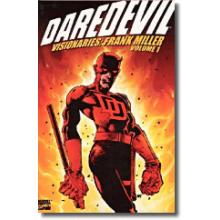
On the flip-side of that same coin is this: When I was a kid, writer/artist Frank Miller was doing Daredevil for Marvel Comics, and I would read them in school. There was a girl in my math class who teased me for reading comics.

One day, she was bored, having finished her assignment, and asked if she could read one of my comics. I gave her an issue of Daredevil. She got caught up in the story and wanted to read more. I brought her the entire run of the series. She plowed through the books, and upon completing the last issue, requested the next. She was flabbergasted to hear she would have to wait an entire month!

Miller had crafted his stories well. There was plenty of action, but there was always an emotional component to what was happening that made me, the girl in my math class, and thousands of other people, wait with baited breath for each issue.

When Miller took over the storytelling chores on Daredevil, it went from being one of Marvel’s least-selling books to one of its most popular. Marvel is still making money off Miller’s run on the series two decades later.

Sunday, October 30, 2005

The Use of Clones Part 2


John Steinbeck uses a cast of clones in his novel, Of Mice and Men. The armature of that story is that people need companionship. It is both dramatized as well as stated. If it has been a while since you’ve read it, I suggest you reread it soon. It is amazingly well-crafted. He knows what he wants to say and says it over and over again in different ways. And he does give you an intellectual idea on an emotional level.

In the story, George and Lennie are two migrant workers who travel and work together. Lennie, being mentally challenged, is a lot of trouble for George, but his love for Lennie and his needs for companionship are worth the trouble. Other characters even comment on how strange it is for these two to travel together.

One of the first things that happens is that George discovers that Lennie is petting a dead mouse he is keeping in his pocket. Lennie is a huge man and has no sense of his own strength and had killed the mouse by accident. Lennie enjoys the companionship of small, soft animals, and is obsessed with one day having rabbits to take care of.

When the duo reaches the ranch where they are to work, one of the people they meet is the boss’s wife. She often flirts with the ranch hands because her husband doesn’t pay attention to her—she craves companionship.
There is also on this ranch an old man who has on old dog. The other hands in the bunkhouse think the dog is worthless. A man named Carlson suggests that the man shoot the stinky old dog because it has, as he puts it, “‘Got no teeth,’ he said. ‘He’s all stiff with rheumatism. He ain’t no good to you.’”

The scene goes on with Candy, the old man, protesting, but Carlson won’t let go of his idea that the dog should be shot.

Candy looked about unhappily. “No,” he said softly. “No, I couldn't do that. I had ’im too long.”

“He don't have no fun,” Carlson insisted. “And he stinks to beat hell. Tell you what. I'll shoot him for you. Then it won't be you what does it.”

Candy threw his legs off his bunk. He scratched the white stubble whiskers on his cheek nervously. “I’m so used to him,” he said softly. “I had him from a pup.”

“Well, you ain’t bein’ kind to him keepin’ him alive,” said Carlson. “Look, Slim’s bitch got a litter right now. I bet Slim would give you one of them pups to raise up, wouldn’t you, Slim?”

The skinner had been studying the old dog with his calm eyes. “Yeah,” he said. “You can have a pup if you want to.” He seemed to shake himself free for speech. “Carl's right, Candy. That dog ain’t no good to himself. I wisht somebody’d shoot me if I get old an’ a cripple.”

Candy looked helplessly at him, for Slim’s opinions were law. “Maybe it’d hurt him,” he suggested. “I don’t mind takin’ care of him.”

Carlson said: “The way I’d shoot him, he wouldn’t feel nothing. I’d put the gun right there.” He pointed with his toe. “Right back of the head. He wouldn’t even quiver.”

At last Carlson said: “If you want me to, I’ll put the old devil out of his misery right now and get it over with. Ain’t nothing left for him. Can’t eat, can’t see, can’t even walk without hurtin’.”

Candy said hopefully: “You ain’t got no gun.”

“The hell I ain’t. Got a Luger. It won’t hurt him none at all.”

Candy said: “Maybe tomorra. Le’s wait till tomorra.”

“I don’t see no reason for it,” said Carlson. He went to his bunk, pulled his bag from underneath it, and took out a Luger pistol. “Let’s get it over with,” he said. “We can’t sleep with him stinkin’ around in here.” He put the pistol in his hip pocket.

Candy looked a long time at Slim to try to find some reversal. And Slim gave him none. At last Candy said softly and hopelessly: “Awright—take ’im.” He did not look down at the dog at all. He lay back on his bunk and crossed his arms behind his head and stared at the ceiling.

From his pocket Carlson took a little leather thong. He stooped over and tied it around the dog’s neck. All the men except Candy watched him. “Come, boy. Come on, boy,” he said gently. And he said apologetically to Candy: “He won't even feel it,” Candy did not move nor answer him. He twitched the thong. “Come on, boy.” The old dog got slowly and stiffly to his feet and followed the gently-pulling leash.

Carlson takes the dog out to shoot him, and the old man lies on his back looking at the ceiling, and after an agonizingly long time, a shot is heard in the distance. With this, Candy rolls over in his bunk and faces the wall.

We see how much this stinky, old dog means to this man. The dog and the old man are clones of Lennie and George.

How do I know that I’m not reading all of this into the story? One way to know is the repetition of the armature. It is dramatized over and over again. The scene where they shoot the old man’s dog is a well-written scene, but what makes it great is that it nails home the armature using emotion to do so.

Tuesday, October 25, 2005

THE USE OF CLONES Part 1


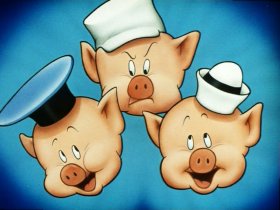
“ONCE UPON A TIME THERE WERE THREE LITTLE PIGS… .”

What I am calling clones have been called other names—“mirror characters” and “reflection characters”—but, whatever you call them, they are useful tools of the storyteller’s craft.

A “clone” in story terms is a tool for showing, not telling. Clones are characters in your story that represent what could, should or might happen to the protagonist if s/he takes a particular path.

Two of the Three Little Pigs are clones. It is the failure of the first two pigs that allows us to measure the success of the last pig. This is a simple use of clones, and one of the most obvious to see.

But clones exist in more complicated stories as well. In J.R.R. Tolkein’s Lord of the Rings, the pitiful character of Golem is used to show what might happen to the hero Frodo if he is seduced by the power of a magic ring. Just as in the story of the three pigs, we measure the success of one character by the failure of another.

In Tootsie, the woman who is the object of Dustin Hoffman’s desire is dating a lying womanizer. In one scene, Dustin, as a woman, confronts the womanizer and tells him that he understands his womanizing ways better than he thinks. This is a way for Dustin to “see” and confront himself.

The television show ER uses clones to great effect. Often a character will have a problem that is then mirrored by a patient. If a doctor has a drinking problem, for instance, the next thing you know she is treating a drunk driver. With that, she, and we, see what might happen if the character doesn’t change her ways.

Going back to The Wizard of Oz, all three of Dorothy’s companions are clones. They, like she, are looking for something they already have. Having clones is a way of dramatizing ideas; again, a way of showing instead of telling. As I said earlier, the audience sees that the Scarecrow has brains from the very first scene and it is reinforced throughout the story. Perhaps you may remember the line, “Don’t cry, you’ll rust again,” said to the Tin Man. Hmm, turns out he does have a heart, after all.

Wednesday, October 19, 2005

RITUAL PAIN part 3


The Apartment has two characters who change, but they both learn essentially the same lesson.
Because change is never easy, and is resisted, it is your job as a storyteller to apply as much pressure on your characters as possible. You must back them into a corner and force them to change. Make it as painful as you can. Bring them to the brink of physical or emotional death if you possibly can. Your protagonist will be measured by the size of her struggle, so don’t pull any punches.
Those who believe in reincarnation believe that we die and are reborn until we learn whatever we were sent to learn in life. When we finally attain wisdom, we ascend to a higher plane of existence. We are rewarded.
You don’t need to believe in reincarnation to see this idea played out. Many of us know people who repeat the same mistakes over and over in their lives. They might, for instance, keep dating people who disrespect them. Until they realize that they bring this on themselves, they will never be happy. They will never get their reward.

Groundhog Day is a great example of this concept in story form. Bill Murray is, in a sense, reborn every day. At one point he even tries to kill himself to get out of this cycle, but it doesn’t work. It is only when he starts to focus on things outside of himself, and becomes a better person, that he is able to reap his reward. He then “ascends” and is able to move on to a higher level of existence.

A character always knows what he wants, but hardly ever what he needs. In the end, the character usually gets close to what he wants and chooses the need instead. For example, in Casablanca, Bogart gets the girl—the very thing he’s wanted through the entire story. But he tells her to go with her husband. His need is to get over Ingrid Bergman. When he is holding tightly to his want he is a bitter, selfish man. He even says, “I stick my neck out for no one.” In the end, he risks his neck to assure that the woman he loves can leave with her husband. We know he is a better person. He has grown. He has ascended.

In The Apartment, Jack Lemmon gets the promotion he’s been after from the beginning of the story. But he is done compromising his self-respect, and turns down the job. He has ascended. This act helps him get his real reward, the woman he loves.

In E.T., Elliot wants his friend to stay with him, but helps him get home. He puts the needs of his friend ahead of his own desires. It is painful for him, but it is the right thing to do. Elliot ascends to a better place through suffering ritual pain.

Most viewers of E.T. are unaware that they are watching the transformation of a character from a selfish child to a caring human being, but they do feel it.

Ritual pain means painfully killing off one aspect of a character’s personality to make room for something new.

Character transformation and growth is one of the most powerful forms of invisible ink, and you would do well to include it in your work.

Tuesday, October 11, 2005

RITUAL PAIN part 2


James Cameron took what could have been a little B movie and made Terminator into a surprise box office hit. He put Linda Hamilton’s character, Sarah Connor, through the ritual pain of being hunted down and nearly killed. In the end she is transformed into a woman who knows that her life matters. She has also been hardened by the experience and seems less girlish. Grown up.

In Terminator 2, it is Sarah Connor who becomes the terminator. It is she who tries to kill a man for something he will do in the future. Through ritual pain she realizes that she has become the very thing she hates.

In Aliens, Cameron had Sigourney Weaver’s character, Ripley, is plagued by nightmares of the creature she had survived in the first film. Through the ritual pain of battling these creatures again, she purges herself of these nightmares and takes back her life.

Billy Wilder understood the power of character change so well that when the American Film Institute listed the top one hundred films of all time, four were his.

In Sunset Boulevard, Wilder had character Joe Gillis, an out-of-work Hollywood screenwriter, sell out for a little security and become the kept man of an older ex-movie star. He becomes her pet. In fact, when they first meet, the pet chimp of the has-been star has just died. It is no mistake that it is following this that Joe Gillis moves into the woman’s home. At one point in the film she dresses Joe in a tux—sometimes called a monkey suit. It is through the ritual pain of being a kept man that Joe Gillis learns that having a swimming pool isn’t worth selling out his principles.

This idea of selling out shows up again and again in Wilder’s films. In The Apartment, Jack Lemmon plays a man who, to climb the corporate ladder, lends his apartment out to adulterous executives at the insurance company where he works. Sometimes this means not getting into his own apartment and having to sleep in the park. He, of course, learns to stand up for himself.

Also in The Apartment, Shirley Maclaine plays a woman who is having an affair with one of the aforementioned executives. This idea of selling out, or prostituting oneself, hits hard when the executive, not having time to buy a Christmas present for his mistress, hands Shirley a hundred dollar bill as a gift. It is through the ritual pain of being made to feel cheap that Shirley learns to respect herself enough to be with a man who will commit to her fully.

RITUAL PAIN part 1


James Cameron took what could have been a little B movie and made Terminator into a surprise box office hit. He put Linda Hamilton’s character, Sarah Connor, through the ritual pain of being hunted down and nearly killed. In the end she is transformed into a woman who knows that her life matters. She has also been hardened by the experience and seems less girlish. Grown up.

In Terminator 2, it is Sarah Connor who becomes the terminator. It is she who tries to kill a man for something he will do in the future. Through ritual pain she realizes that she has become the very thing she hates.

In Aliens, Cameron had Sigourney Weaver’s character, Ripley, is plagued by nightmares of the creature she had survived in the first film. Through the ritual pain of battling these creatures again, she purges herself of these nightmares and takes back her life.

Billy Wilder understood the power of character change so well that when the American Film Institute listed the top one hundred films of all time, four were his.

In Sunset Boulevard, Wilder had character Joe Gillis, an out-of-work Hollywood screenwriter, sell out for a little security and become the kept man of an older ex-movie star. He becomes her pet. In fact, when they first meet, the pet chimp of the has-been star has just died. It is no mistake that it is following this that Joe Gillis moves into the woman’s home. At one point in the film she dresses Joe in a tux—sometimes called a monkey suit. It is through the ritual pain of being a kept man that Joe Gillis learns that having a swimming pool isn’t worth selling out his principles.

This idea of selling out shows up again and again in Wilder’s films. In The Apartment, Jack Lemmon plays a man who, to climb the corporate ladder, lends his apartment out to adulterous executives at the insurance company where he works. Sometimes this means not getting into his own apartment and having to sleep in the park. He, of course, learns to stand up for himself.

Also in The Apartment, Shirley Maclaine plays a woman who is having an affair with one of the aforementioned executives. This idea of selling out, or prostituting oneself, hits hard when the executive, not having time to buy a Christmas present for his mistress, hands Shirley

Tuesday, October 04, 2005

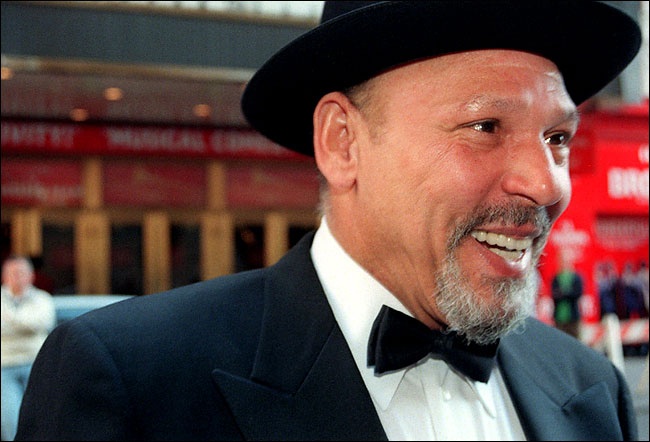
What August Wilson Taught Me About Being A Writer


When I first met August Wilson, I thought, Here is a guy who can help me understand my craft. I was in a little mall on Seattle's Capital Hill and I looked over and there he was – a living legend. Mr. Wilson, as I called him then, was reading the paper and standing by himself. He was arguably America's greatest living playwright and undoubtedly the most successful African-American playwright ever. He was internationally respected and almost any dramatist would give anything to be standing where I was at that very moment; I decided that I could not let this opportunity pass by. I approached him nervously and asked if he was August Wilson. He looked at me like I was going to serve him a subpoena and nodded. I told him what I would witness many people telling him over the years: that he was great and his work was great, etc. He'd heard it all before and was polite, but didn't seem to want to talk about himself. August Wilson was not a self-centered man.

Over the next few years our conversations became longer. He was not just an interesting man – he was an interested man. He was much more at home talking to people about themselves than having them gush over him.

He even became a fan of my work. (It's still weird to write those words down.) He really liked a film I made called White Face and dashed across a busy street to tell me he had seen it and how much he liked it. He went on and on laughing and reciting lines from the film. From then on he treated me like a peer. I mentioned the story structure class that I teach and he suggested that he should take it. I was blown away. I said, "You have two Pulitzers to my zero! Why would you want to take my class?"

He told me a story about a guy he knew who had once met the great jazz saxophonist John Coltrane. The man sheepishly mentioned to Coltrane that that he too played the saxophone. Coltrane's response was: "What can you teach me?" August wanted to know what I could teach him. In fact, once I was on my cell phone and August approached and hovered around until I got off the phone. He then asked me for advice on his new play. I told him what I thought and he took notes and listened.

At first I thought I was part of an exclusive club, being friends with August Wilson. As it turned out, August was there for anyone who was courageous enough to approach. He made friends (real honest-to-goodness friends) with passing homeless people and crack addicts. He knew things about their lives that when revealed made these street people into three-dimensional human beings. Most of us avoid even making eye contact with these people, but August Wilson would engage them in conversation.

Of the people August would meet almost every morning for coffee, I was the only writer. He was not a cliquish man. Anyone was welcome into the circle. August Wilson was not the kind of writer who observed life without getting involved in it. He was both an observer and a participant.

When I first met August Wilson, I thought he would teach me about the craft of writing, but he ended up asking me more questions than I ever asked him. What I realize now is that he was teaching me that a writer is always learning and willing to learn. He taught me that living life is the best way gather material. He taught me that the crack addict on the street may teach you more about life than a college professor. He taught me that you can ask of anyone you meet: "What can you teach me?" He taught me that if you reach for the humanity in others that you will find it within yourself. All of these things will make you a better writer, and a better human being.

August Wilson died Sunday, October 2, of liver cancer.

Friday, September 30, 2005

RITUAL PAIN part 1


“EVERYBODY WANTS TO GO TO HEAVEN, BUT NOBODY WANTS TO DIE.”
—Blues song lyric

A few years ago, when I was working on a spec screenplay that involved gangs, I visited a school with a lot of gang activity and asked the kids about how gangs worked. One of the things that I found out was that in order to join a gang you had to be “jumped” in. What that means is that you let the other gang members beat the crap out of you for a proscribed amount of time, anywhere from two to five minutes. After that, you are a member of the gang.

This sounded so barbaric to me. I didn’t understand why anyone would allow himself or herself to be abused in this way.

A couple of years after that, I was writing a comic book that had an Australian Aborigine as one of the main characters. While doing research, I read about one tribe that would knock one or two teeth out of adolescents as part of their initiation into adulthood.

I thought back on years earlier when a good friend of mine was rushing a fraternity. I could have never let myself be humiliated the way he allowed himself to be.

I began to see a pattern—groups of men or boys all have some kind of harsh initiation into their fold. It doesn’t seem to be anything that has to be taught; it appears to be inherent behavior.

Later, I was talking with an African shaman who lived in my neighborhood and he began to talk about the manhood ceremony in his village. He talked about tribal peoples all over the world having similar ceremonies that involved what he called “ritual pain.” Sometimes it is ritual scarification or tattooing. Sometimes it is a solo hunt for a ferocious beast. Other times it is to survive alone in the forest. In some cultures it involves a circumcision. Blood or the possibility of bloodletting is almost always part of the ritual. Like the street gangs say, “blood in, blood out.” Meaning that you must undergo the pain to get into, or get out of, a gang.

In all cases, the purpose of this ritual seems to be about tearing the individual down and then transforming them from boyhood to manhood. At the end of the ritual they are considered full-fledged members of the group with the rights, privileges, and responsibilities of an adult of said group.

I asked the shaman about women, and he thought that women don’t usually have these kinds of ceremonies because they have a natural bloodletting that signifies their transformation from girls to women. Plus, they often have blood and/or pain when they lose their virginity. And we all know that there is pain in childbirth, and that does certainly change a woman. There is female circumcision, but it is imposed by men on women; therefore, it is not included here.

I started to think of this idea in story terms. The second act is a kind of ritual pain that changes your character. Usually your character has what has been called a fatal flaw. There is something they need to learn before they can be transformed into a better, more mature, person.

What is it that Elliot’s brother says to him in E.T.? “Why don’t you grow up and think how other people feel?”

We are all resistant to change. There is an old blues song that contains the lyric, “Everybody wants to go to heaven, but nobody wants to die.”

There is more than likely something about yourself that you would like to change or that you should change but it is too difficult. I don’t know why the world works this way, but the things we should do are always the most difficult. So we rarely run toward change. This is true of your characters as well.

In Toy Story, Buzz Lightyear won’t believe that he is a toy and not a space ranger. Also in Toy Story, Woody has to learn to share the affection of his owner with Buzz. When you see the film again, you’ll see that this transformation is not an easy one for them, but they are better “people” when they do change.

In Toy Story 2, Woody is in danger of being discarded and meets Jesse, a clone, who tells him what his fate might be. It is painful for both of them, but they both realize that they have value.

Understanding story allowed Pixar to make one of the few sequels that measures up to the original. John Lasseter and the people at Pixar understand story as well as anyone. Study these films.

Look at Jaws again. Take a man afraid of the water, subject him to the ritual pain of doing battle with a shark, and that pain transforms him. Cures him.

Thursday, September 22, 2005

TELEVISION - THE FIRST THOUSAND YEARS


I once saw a TV guide, or something, that claimed to list the top shows of the millennium. Since TV wasn't around until 1948 that left around 950 years of programming that could not qualify simply because there was no way to broadcast it. I thought this was unfair, favoring shows in the 20th century, so did a little research and decided to add my historical shows to the list.
This list is not chronological.
SHOW: INQUEST P.O.P.E._STATION: THE TRINITY NETWORK_This hour cop drama dealt with the trials of the boys in The Spanish Inquisition. Storylines had the characters cracking down on heretics who worked on the Sabbath or were of the Jewish faith and other such heinous crimes against God. Critics praised the show for it's gritty look achieved by the revolutionary technique of using hand-held candles.
SHOW: POCKET FULL OF POSIES _STATION: BLACK DEATH NETWORK _This popular game show took people stricken with the plaque and put them before contestants who would then wager on which would die first. Winners could receive valuable prizes such as a stale loaf of bread, rancid wine or a year's worth of bloodlettings.
SHOW: MASON AND DIXION _STATION: THE UNION NETWORK_Despite its being unpopular this show about brother fighting brother ran for four years and employed a large cast. This cutting edge show dealt with such hot topics as miscegenation and whether "The Negro" had the intelligence to vote.
SHOW: THE WITCH HUNTERS _STATION: COLONIAL NETWORK _This nighttime teen soap was the Buffy the Vampire Slayer of its day. The drama starred three teenaged girls who had the power to spot people who worshiped Satan. The accused would be set afire, drowned or weighted down with stones until dead. The genius of the show was that no one was safe. The suspense of who would be next to die kept the audience, and cast, on their toes.
SHOW: MANIFEST DESTINY _STATION: THE NEW WORLD NETWORK_A popular adventure series about the genocide of the indigenous people of the Americas. Young boys tuned in each week to see their hero, Chris Columbus, cut of the noses of those thieving San Salvadorians. Or to see Ponce de Leon run a red man through with his sword for not knowing the location of the mythical Fountain of Youth. Because the show was so popular with younger viewers the network received many letters from angry parents regarding the violence - they wanted more. The network honored the request and received such high ratings that the show ran for 500 years.
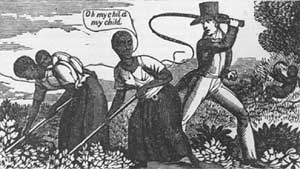
SHOW: THREE HUNDRED'S A CROWD _STATION: TRIANGLE TRADE NETWORK _A very popular sitcom about the hilarious goings on board an American slave ship. The show's plotlines usually hinged on misunderstandings, since the slaves chained together didn't speak the same language. This long running show lasted over two hundred years!
SHOW: THE NEWCOMMERS _STATION: THE LIBERTY NETWORK_This comedy pokes fun at immigrants who came to America seeking a better life, but who have a strange way of talking and dressing. But the real comedic irony comes when those who were immigrants just a few years before behave as if they've been in America all long and treat the newcomers like they don't belong. Amazingly, this show is still running today.
SHOW: THE CRUSADERS _STATION: THE HOLY CITY NETWORK_This hour long army show took full advantage of exotic locations as the shows plot revolved around the taking back of the holy land from those infidels the Turks. Despite many cast changes, this program ran for generations.
SHOW: CAMP MANZANAR _STATION:: THE CONSTITUTION NETWORK _A wacky sitcom about a group of Japanese-Americans who had their rights, property and dignity taken away by the government. This show was largely ignored by Americans and is all but forgotten now but, at the time, had its devoted fans who fought to keep it going.
SHOW: LI'L JIMMY CROW_STATION: THE CONFEDERATE NETWORK _The show followed the humorous misadventures of a cute little black boy who didn't quite understand his place in the world and so tried to do all the same things other children did, like using a public restroom, looking a white person in the eye or be treated like a human being. Although not as popular in the North, this show lasted well into the 20th century. It had a way of making some people feel better about themselves.
Don't worry if you've never seen these shows, if I know my history, most of them will be in reruns in one form or another.

Sunday, September 18, 2005

dramatization and armature


The following is a story by Aesop.

“BUNDLE OF STICKS”

Once there was a farmer with many sons whose sons were always bickering and fighting with each other. One day the farmer called his sons together. He had with him a bundle of sticks tied together.

He commanded each son to take the bundle and break it in half. In turn they tried and failed. The farmer then untied the bundle, handed each son a single stick and told them to break them now. Which they did so with ease.

“You see, my sons,” said the farmer, “if you are of one mind, and unite to assist each other, you will be unaffected by all the attacks of your enemies; but if you are divided among yourselves, you will be broken as easily as these sticks."

Armature (Moral): In unity there is strength.

Aesop lived nearly 3,000 years ago and his stories are still told. Not only are they told they thrive. They are part of our everyday lives. Everyone knows what we mean when we say someone is a wolf in sheep’s clothing. Or if we say someone has sour grapes. Or if we say of someone that he/she is crying wolf. All of these sayings are from Aesop’s stories.

Why have stories told so long ago stuck around? It is because they had something to say about living as a human being in society, and people haven’t changed much since 600 BC. And believe me, as long as there are people, we will have the same problems we have always had.

Aesop’s armatures are often called morals, but whatever you call them, it all boils down to the fact that he had a point. Not only that, but he dramatized his point. The farmer in the “Bundle of Sticks” story demonstrates his point to his sons rather than just telling them. This also demonstrates Aesop’s point to the reader.

Just as with a joke, these short-form stories have no excess elements. Remember that this is true of any well-crafted story, regardless of length.

I included this story to dramatize the ideas of dramatization and armature.